
A square of chocolate can make a thoughtful wine taste flat, sharp, or suddenly extraordinary. Finding the best chocolate for wine pairing is less about memorizing rules than understanding one delicious fact: chocolate is intensely flavorful, sweet, fatty, and often bitter. The wine needs enough character to meet it, but not so much that it bulldozes the cacao.
For a memorable tasting, begin with high-quality chocolate made from carefully sourced cacao and real ingredients. Fine bean-to-bar chocolate carries origin notes, texture, acidity, and aroma that give wine something worth answering. A creamy milk chocolate filled with hazelnut praline asks a completely different question of a bottle than a brisk 70% dark bar with red-fruit acidity.
What Makes Chocolate and Wine Work Together
The first challenge is sweetness. As a reliable starting point, the wine should be at least as sweet as the chocolate. If the chocolate is sweeter than the wine, even a lovely red can turn dry, tannic, or oddly sour. This is why many classic pairings lead naturally toward late-harvest wines, port-style wines, Madeira, sherry, and sparkling wines with a touch of residual sugar.
Then come tannins. Both red wine and dark chocolate can be tannic, creating a drying sensation that builds quickly on the palate. That is not always a flaw. A firm, structured Cabernet can be thrilling beside a very dark, earthy chocolate for people who enjoy intensity. But for most tasters, a fruit-forward red with softer tannins is more forgiving.
Finally, look for a shared note or a satisfying contrast. Berry-filled chocolate and ruby port speak a similar fruity language. Salted caramel and tawny port meet through toasted nuts and warmth. A citrusy dark chocolate can find lift and refreshment in an aromatic sparkling wine. The goal is not to make the wine disappear into the chocolate. It is to let each taste reveal something new in the other.
Best Chocolate for Wine Pairing by Style
Milk chocolate: reach for bubbles or gentle sweetness
Milk chocolate is often underestimated at a wine table. Its dairy richness, caramel-like sweetness, and low bitterness make it wonderfully welcoming, but a dry, tannic red can make it taste cloying. Try it with demi-sec sparkling wine, Moscato d’Asti, or a lightly sweet Riesling. The bubbles cleanse the palate, while stone-fruit and floral notes bring brightness to the creaminess.
Milk chocolate with nougat, brittle, or praline loves wines with nutty, honeyed character. A tawny port is a particularly polished choice, especially when the chocolate has roasted hazelnut, almond, or caramel notes. Serve the wine slightly cool rather than warm, so its sweetness remains poised instead of heavy.
Dark chocolate: match cacao with depth, not brute force
Dark chocolate is where cacao percentage matters most. A 60% to 70% bar usually has enough sweetness to pair with a fruity red, while chocolate above 75% often benefits from a sweeter, more concentrated wine. Think of higher cacao as raising the volume on bitterness, roast, and acidity.
For dark chocolate around 65%, pour a plush Zinfandel, Grenache, or Syrah with ripe berry fruit and moderate tannins. These wines can pick up the chocolate’s blackberry, cherry, pepper, or spice notes without leaving the finish abrasive. If your dark chocolate tastes naturally fruity or lightly acidic, a Pinot Noir with generous fruit can be a graceful option.
For 70% to 85% dark chocolate, vintage port, Banyuls, and rich red dessert wines are dependable companions. Their sweetness softens bitterness, while their dark-fruit concentration feels at home with cocoa. A small pour goes a long way. This is a pairing for lingering, not rushing.
Very dark chocolate can also work with dry wine, but the match becomes more personal. Choose an earthy, minimally sweet dark bar and a mature, savory red with softened tannins, such as an aged Rioja. The result is less dessert-like and more contemplative, with tobacco, dried cherry, leather, and roast-cacao notes moving across the palate.
White chocolate: use acidity as a counterweight
White chocolate contains cocoa butter rather than cocoa solids, so it is lush, sweet, and buttery rather than bitter. Crisp acidity is its best friend. Late-harvest Riesling, ice wine, Sauternes, and sweet sparkling wines can all bring welcome lift.
This is also where inclusions become decisive. White chocolate with lemon, passion fruit, or berries is splendid with a floral Moscato or an off-dry Riesling. White chocolate with vanilla, caramel, or toasted nuts leans toward a sweet Chenin Blanc or tawny port. Avoid aggressively oaky whites, which can turn the pairing into butter on butter with nowhere to go.
Fruit, spice, and filled chocolates: follow the center
Filled chocolate rewards a more imaginative approach because the center can lead the pairing. Raspberry, cherry, black currant, and strawberry fillings often come alive beside ruby port, Brachetto, or a sparkling red with a kiss of sweetness. Apricot and citrus fillings shine next to late-harvest Riesling or Moscato.
Spiced chocolates ask for fragrance rather than sheer power. Chili chocolate can be excellent with a jammy Zinfandel, whose ripe fruit cushions the heat, or with a sweet fortified wine that turns the spice warmer and rounder. Cinnamon, cardamom, ginger, and clove work beautifully with aromatic wines such as Gewürztraminer, especially when the chocolate has fruit or marzipan alongside the spice.
Salted caramel deserves special attention. Salt can make wine seem softer and fruitier, while caramel brings browned-sugar depth. Tawny port is the classic answer, but a sweet oloroso-style sherry or Madeira can be even more intriguing. Their nutty, dried-fruit character makes the pairing feel like an elegant dessert course rather than a simple sweet finish.
A Simple Tasting Method That Prevents Bad Matches
Set out three chocolates and three small wine pours rather than trying to pair an entire collection at once. Start with the lightest chocolate and the lightest wine, then move toward darker cacao and richer bottles. Begin with a sip of wine, taste the chocolate slowly, then take another sip. The second sip tells you whether the pairing truly works.
Pay attention to the finish. A successful match may make the wine taste fruitier, soften the chocolate’s bitterness, extend a spice note, or leave the palate refreshed. A poor match often makes the wine feel metallic, thin, sharply alcoholic, or punishingly dry.
Temperature matters, too. Chocolate should be cool room temperature, never refrigerator-cold, so its aroma and texture can open properly. Chill sweet wines, sparkling wines, and tawny port lightly. Red wines intended for chocolate generally show better just below typical room temperature, around 60 to 65 degrees Fahrenheit.
Water and plain crackers are useful resets, especially during a longer tasting. Skip heavily flavored snacks, scented candles, and strong coffee beforehand. They can blur the quieter notes that make artisan chocolate interesting.
Build a Tasting Worth Sharing
A well-chosen tasting does not need to be formal, but it should have a point of view. You might pour one sparkling wine against milk, white, and fruit-filled chocolate to see how acidity changes each bite. Or compare one dark origin bar with a fruity red, tawny port, and vintage port to discover whether you prefer contrast, harmony, or full-bodied drama.
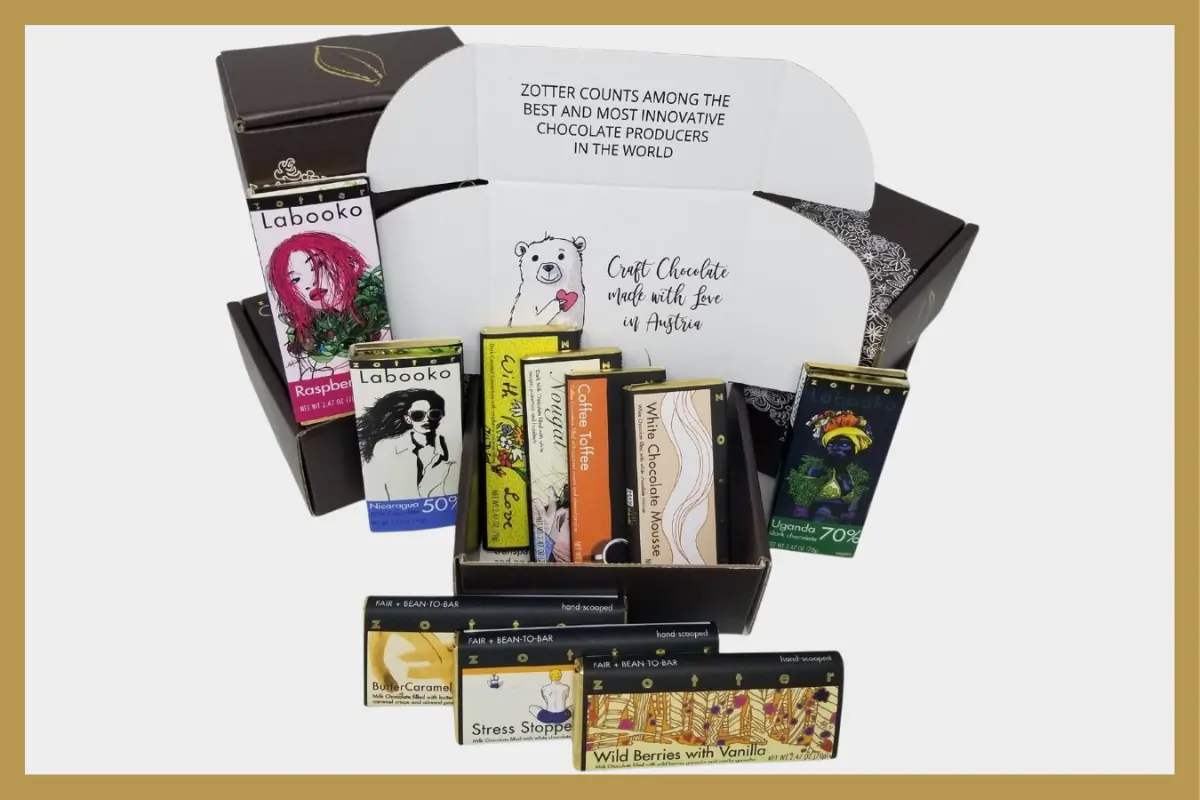
For gifting or hosting, variety creates the experience. Include a familiar flavor such as milk chocolate praline, then add a vivid fruit filling, a spice-led bar, and a serious dark chocolate. Zotter’s hand-scooped assortment is especially suited to this kind of playful, high-end tasting because each bar gives the wine another flavor story to answer.
There is no prize for choosing the most powerful wine or the darkest chocolate. Pour what you are curious about, take smaller bites than you think you need, and let an unexpected pairing earn its place at the table.