
A square of chocolate can carry more than sweetness. It can offer bright berry acidity, roasted-nut depth, floral perfume, a whisper of spice, or the creamy comfort of a well-made filling. So, does organic chocolate taste better? Sometimes, emphatically. But the organic label alone is not a magic flavor switch. The real answer lives in the cacao, the people growing it, the ingredients around it, and the craft that turns beans into a finished bar.
For chocolate lovers who pay attention to what is behind the wrapper, organic can be a promising sign. It often points toward more intentional agriculture and a shorter, more considered ingredient list. Yet exceptional flavor still requires precision at every stage. A forgettable chocolate can be organic. A spectacular one can be organic because every decision, from fermentation to the final recipe, was made with taste in mind.
Does organic chocolate taste better in a blind taste test?
Not automatically. Organic certification verifies how ingredients are grown and handled according to defined standards. It does not guarantee that cacao was fermented well, dried carefully, roasted with sensitivity, or balanced into a delicious recipe. Those are separate acts of expertise.
Still, many people find that high-quality organic chocolate tastes more vivid and less muddled than conventional alternatives. That is often because premium organic makers choose fine-flavor cacao, use straightforward ingredients, and give the chocolate time. The organic standard may be part of the story, but flavor is the result of a much larger set of choices.
A blind tasting can make this wonderfully clear. Compare several dark bars with similar cacao percentages, then notice the differences: one may be dry and bluntly bitter, while another opens with cherry, toasted almond, honey, or citrus. Neither a high cacao percentage nor an organic seal tells the full story. The bar that tastes better is the one made from better beans and treated with greater care.
What organic farming can bring to the flavor
Cacao is a fruit, and like coffee or wine grapes, it reflects its growing conditions. Soil health, shade, rainfall, variety, harvest timing, and post-harvest handling all leave a mark. Organic farming practices can support healthier, more diverse growing systems, often using compost, natural soil management, and shade trees rather than relying on synthetic inputs.
That does not mean organic cacao has one recognizable flavor. A cacao from Peru may taste gently fruity and nutty, while a bar made with beans from Madagascar can feel lively, tangy, and red-fruit forward. The point is not that organic tastes like a particular thing. It is that thoughtful farming can help preserve the character that makes a cacao origin worth tasting.
There is also a practical ingredient question. In a milk chocolate bar, an elaborate filled bar, or a drinking chocolate, organic standards can extend beyond cacao to sugar, milk, nuts, fruit, spices, and other components. When those ingredients are chosen for their real flavor rather than just their ability to deliver sweetness, the finished chocolate has more dimension.
Flavor begins long before the chocolate factory
The most consequential flavor work often happens at origin. After cacao pods are harvested, the beans and their surrounding pulp are fermented. This step develops the compounds that later become chocolate flavor. Too little fermentation can produce harsh, astringent notes. Poor drying can flatten the flavor or create unwanted mustiness. Careful fermentation and drying create the foundation for complexity.
Then comes roasting. A skilled chocolate maker does not apply one aggressive roast to every bean. Different origins and bean sizes call for different approaches. A gentle roast may retain delicate fruit notes; a deeper roast can bring caramel, cocoa, and toasted flavors forward. Neither is inherently superior. The question is whether the roast serves the bean.
Grinding, conching, and aging matter too. Fine chocolate should feel smooth rather than sandy, and its flavor should develop gradually as it melts. This is where bean-to-bar production earns its reputation. The maker has direct control over the process and can protect the personality of the cacao instead of covering it with heavy vanilla, excess sugar, or generic cocoa flavoring.
That is why shoppers looking for better chocolate should see organic as a meaningful starting point, not the final qualification. Look for a maker willing to talk about cacao sourcing, origin, ingredients, and process. Those details are usually where the delicious evidence lives.
The sugar question: clean flavor versus simple sweetness
Sugar is not the villain of chocolate. It creates balance, softens bitterness, and carries certain aromas. But when sugar dominates, it can make every bar taste broadly similar. In thoughtfully made organic chocolate, sweetness is more likely to be calibrated around the cacao rather than used to conceal it.
This matters especially in flavored and filled bars. A raspberry ganache should taste like raspberry, not pink sugar. A praline should have a clear toasted-nut character. A chili chocolate should build warmth without turning into a dare. Premium artisan chocolate gives each element room to speak.
The same principle applies to milk chocolate. A great milk bar can be creamy, caramelized, and deeply cocoa-forward, not merely sweet. Vegan chocolate can be equally expressive when plant-based ingredients are selected for texture and flavor rather than treated as a compromise. Organic ingredients can support that clarity, but recipe development is what makes it sing.
Why ethics and taste often meet in the same bar
Flavor and sourcing are not identical, but they are closely connected. Farmers who are paid more fairly and supported in long-term relationships have a stronger basis for investing in tree care, harvesting, fermentation, and drying. Those steps improve quality, which can improve flavor.
Fair trade and organic certifications are not shortcuts to perfection, and certification systems have limits. They do, however, give conscious shoppers a useful framework for choosing chocolate made with greater accountability. For many people, a bar tastes better when its pleasure is not detached from the well-being of the people who produced its cacao.
That is not sentimentality. It is a fuller understanding of quality. The best chocolate is not simply smooth or expensive. It has traceable character, thoughtful ingredients, and a sense that the supply chain was treated as part of the craft.
How to choose organic chocolate worth savoring
Start with the ingredient list. For a plain dark bar, cacao and sugar should do most of the work. Cocoa butter is a welcome sign when added for texture; vague fillers and a long lineup of artificial flavorings are less compelling when you are seeking a pure cacao experience.
Next, consider cacao percentage as a style cue, not a scorecard. Around 50% to 60% can be a generous entry point for those who enjoy sweetness and creaminess. Bars in the 70% range often offer a balanced view of cacao character. Above 80%, the bean quality and recipe become even more visible, for better or worse.
Origin information is another invitation to taste with attention. Single-origin bars can reveal how widely cacao flavor can vary, while blends can be masterfully designed for harmony. If you are new to this territory, a discovery selection is more useful than buying one very dark bar and deciding fine chocolate is not for you. Try a range: a pure origin dark bar, a milk chocolate, a fruit-filled creation, and something adventurous with spice, coffee, or nuts.
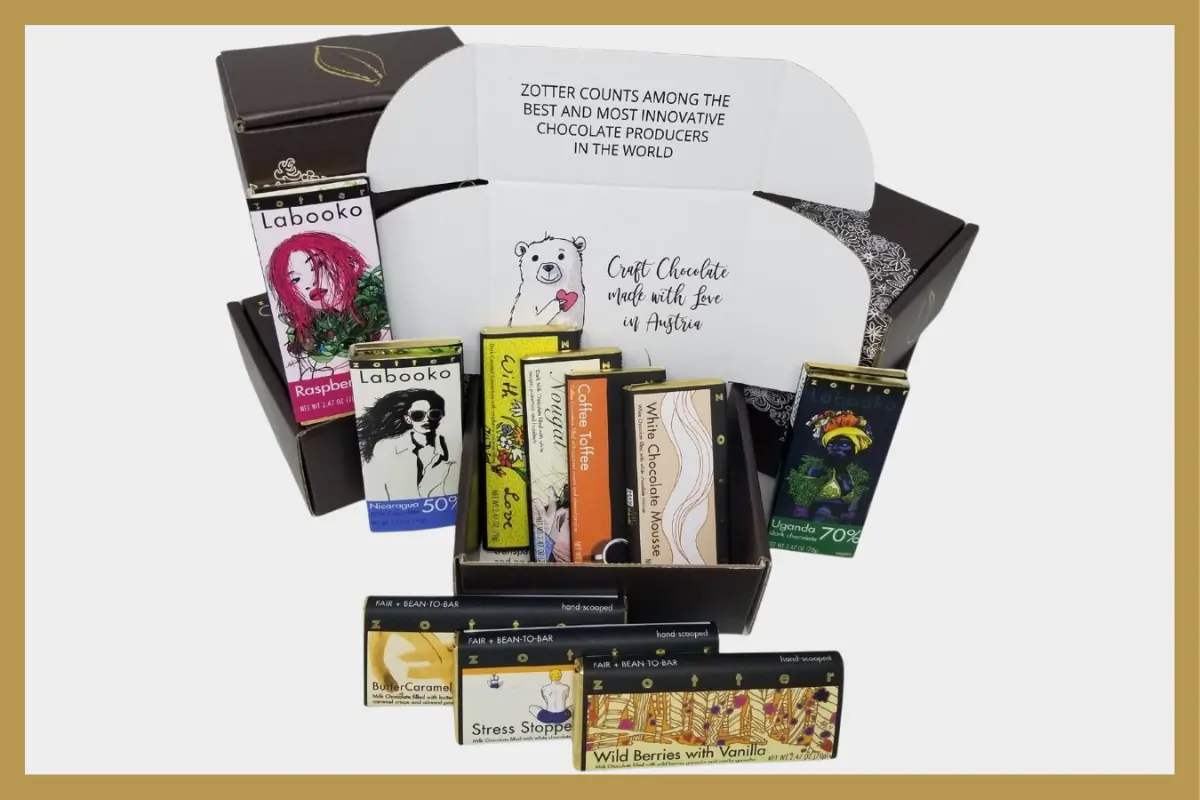
Zotter’s hand-scooped approach is a fine example of why premium organic chocolate can be such a pleasure: serious cacao craftsmanship need not be solemn. A high-end bar can be precise, ethically minded, and gloriously unexpected at the same time.
Taste slowly, then trust your own palate
Break off a small piece and let it melt rather than chewing immediately. Notice the first impression, the middle notes, and the finish. Does the flavor become more interesting as it warms? Is the sweetness balanced? Does the texture feel silky? A memorable chocolate often has a finish that lingers cleanly, inviting another taste without demanding one.
Organic chocolate may taste better because it comes from a more careful system. Or it may simply be the first bar that introduces you to how much flavor cacao can hold. Either way, the most rewarding choice is the one that gives you both a delicious moment and a reason to be curious about the next square.