
A remarkable chocolate bar should leave you thinking about its cacao, its texture, and perhaps its unexpectedly brilliant filling – not wondering whether an ingredient was overlooked. This chocolate dietary restrictions guide is designed for the pleasure-seeking, label-reading chocolate lover: someone who wants to choose thoughtfully while still expecting a genuinely exquisite experience.
Dietary needs do not all ask the same question. A vegan shopper may be avoiding animal-derived ingredients. Someone with celiac disease needs certainty around gluten exposure. A person with a milk allergy must consider not only a recipe’s ingredients, but also how and where the chocolate was made. The most satisfying way to shop is to understand what the labels can tell you, where they have limits, and which details deserve a second look.
Start With the Restriction, Not the Front Label
Terms such as vegan, dairy-free, gluten-free, organic, and plant-based can be useful shortcuts. They are not interchangeable, and a beautiful package claim should never replace the ingredient statement and allergen information.
For a vegan diet, look beyond the obvious milk chocolate question. Dark chocolate can be made without dairy, but fillings may contain milk powder, butter, cream, honey, yogurt, or other animal-derived ingredients. A bar with fruit, nougat, caramel, praline, or a creamy ganache center has more places for animal ingredients to appear than a simple origin chocolate bar.
For a dairy-free choice, distinguish between preference, lactose intolerance, and a milk allergy. Lactose-free does not necessarily mean milk-free, while vegan recipes generally contain no dairy ingredients but may still carry a cross-contact statement. If a milk allergy is involved, that distinction is not a technicality. Read the complete product information every time.
Gluten-free shopping follows a similar rule. Pure chocolate itself is naturally free from gluten, yet inclusions and fillings can change the picture quickly. Cookies, wafers, malt, cereal crisps, beer, and certain flavor ingredients deserve close attention. For people managing celiac disease or a high sensitivity, a gluten-free claim and manufacturer guidance about production practices can matter as much as the recipe.
Chocolate Dietary Restrictions Guide: Read the Whole Story
A premium chocolate bar is often a small composition of many ingredients. That is part of the artistry – and part of why careful reading matters. The ingredient list tells you what was intentionally included. The allergen statement flags major allergens according to the information supplied by the maker. A precautionary statement such as “may contain” or “made in a facility that also processes” speaks to possible cross-contact rather than a listed recipe ingredient.
These three pieces of information answer different questions. Do not treat one as a substitute for another.
If you are shopping for someone else, ask what their restriction actually requires before choosing a gift. “No dairy” may mean a plant-based preference, or it may mean avoiding even trace milk due to an allergy. “Gluten-free” can mean a general lifestyle choice, or it can require strict certified handling. A thoughtful question before you buy is more generous than guessing based on the color of a wrapper or the darkness of the chocolate.
Chocolate labels can also change. Seasonal editions, limited releases, and evolving recipes are part of what keeps an artisan assortment lively, but they make it especially wise to review the current product page and package rather than relying on a bar you bought last year.
Choosing for Common Dietary Needs
Vegan and plant-based chocolate
A high-cacao dark bar is often a natural starting point, but it is not automatically vegan. Seek a clear vegan designation where available, then confirm the ingredients. The most exciting vegan choices are not merely substitutions for conventional chocolate. They can be intentional flavor experiences built around cacao, nuts, fruits, spices, coffee, coconut, and expressive origin character.
Be alert with filled bars. A dark chocolate shell may surround a milk-based center, and a plant-forward sounding flavor can still include honey or dairy. Conversely, a well-crafted vegan bar can be wonderfully layered, with no need to compromise on texture or complexity.
Gluten-free chocolate
For straightforward dark chocolate, gluten is often less likely to be part of the formula. The risk rises with crunchy inclusions and dessert-inspired fillings. Think biscuit pieces, malted notes, wafer layers, brownie-style creations, and cereal components. Those flavors can be irresistible, but they are not the place to assume.
If gluten avoidance is medically necessary, choose products explicitly marked gluten-free when possible and assess precautionary allergen information carefully. When the available information is not specific enough for your needs, select another bar or contact the manufacturer before eating it.
Dairy-free and milk-free chocolate
Milk is common in chocolate for good reason: it brings sweetness, softness, and caramelized depth. But dairy-free chocolate can offer another kind of luxury – clean cacao notes, bright fruit acidity, roasted nut character, or a more direct expression of origin.
Check for milk in both the ingredient and allergen sections. Then consider cross-contact language based on the person’s sensitivity. For someone who simply avoids dairy by choice, a shared-facility statement may be acceptable. For someone with a diagnosed milk allergy, it may not be. There is no universal answer, only the right level of caution for the individual.
Nut, soy, and other allergens
Praline, gianduja, marzipan, and nut pastes are central to many European chocolate traditions. They are also a clear reason to slow down when shopping for a nut allergy. Tree nuts and peanuts may appear as main ingredients, and cross-contact can be relevant in facilities that produce a wide variety of filled chocolates.
Soy may appear as lecithin, an emulsifier used in some chocolate recipes. Sesame, eggs, and sulfites can also show up in specialty fillings, dried fruit preparations, or seasonal creations. The more imaginative the bar, the more rewarding it is to read with attention.
Ingredient Quality Is Part of the Pleasure
Dietary shopping should not reduce chocolate to a list of exclusions. Once you know what to avoid, look for what makes a bar worth savoring: organic ingredients where they matter to you, fair trade cocoa, transparent sourcing, thoughtful roasting, and recipes that let cacao remain vivid rather than burying it in sweetness.
Bean-to-bar chocolate offers a particularly compelling route for ingredient-conscious shoppers because it invites you to taste the work behind the bar. Cocoa origin, roast profile, cacao percentage, and inclusions all shape the final experience. A 70% dark chocolate may be a dependable dairy-free candidate, but it can taste dramatically different depending on whether it leans toward red fruit, toasted bread, citrus, or deep earthiness.
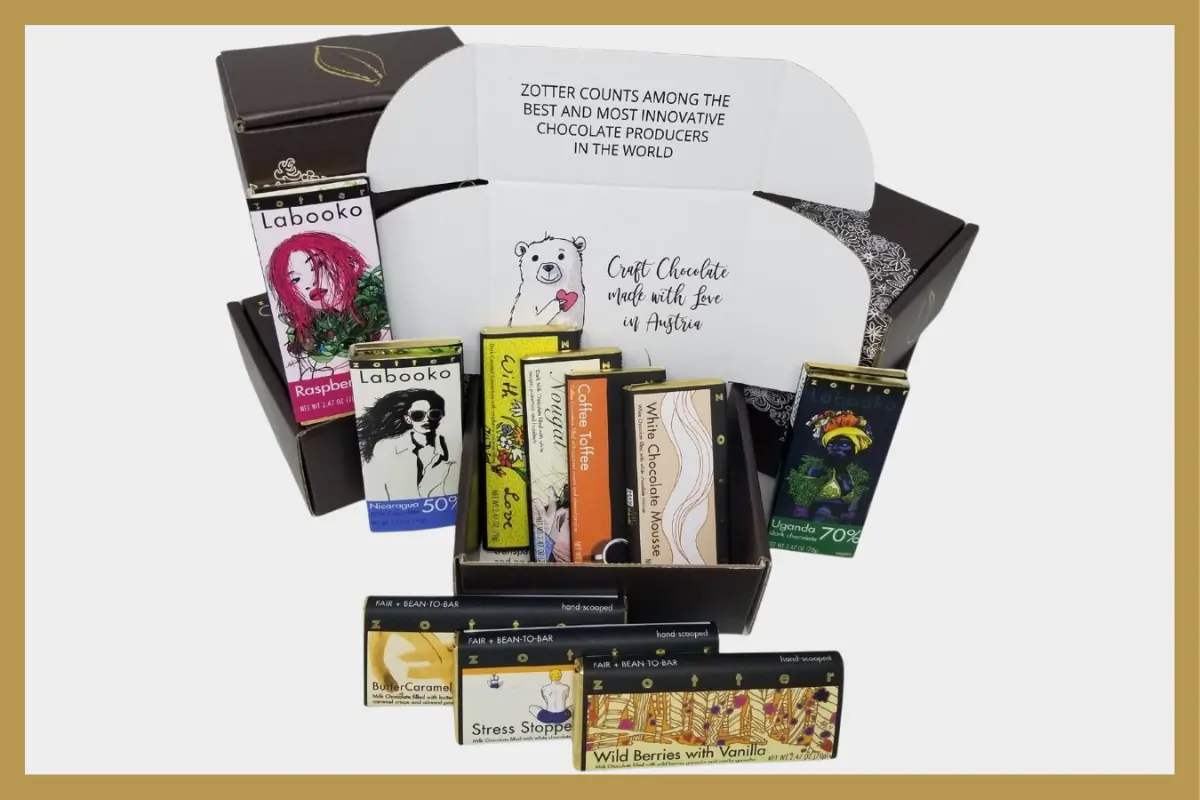
At Zotter, adventurous flavors and artisan fillings make product-specific reading especially worthwhile. The same creative range that makes a discovery feel memorable also means the best choice is never a category assumption. It is the exact bar in your hand.
Make Gifting Easier Without Making Assumptions
Chocolate is a generous gift because it feels celebratory, personal, and immediately enjoyable. Dietary restrictions can make the selection feel higher-stakes, but they do not need to make it joyless. Give the recipient the ingredient information alongside the chocolate, keep original packaging intact, and avoid transferring bars into unlabeled containers.
For a group gift, consider offering a clearly separated assortment with choices for different needs instead of presenting one shared box as universally suitable. This respects the fact that vegan, gluten-free, nut-free, and allergy-aware are not synonyms. It also lets every guest choose something with confidence.
If you are uncertain, a gift card or a carefully chosen discovery format with clear product details can be more thoughtful than a guess. The best luxury gift is not simply extravagant. It is attentive.
When to Ask Before You Eat
For a severe food allergy, a medically prescribed diet, or any situation where trace exposure could be dangerous, treat online descriptions as a starting point rather than the final authority. Review the current packaging, reach out to the maker with precise questions about ingredients and production, and follow guidance from your medical professional.
That little pause does not diminish the ritual of chocolate. It protects it. Once you have found the bars that fit your table, you can return to the better part: breaking a square, noticing the aroma, and enjoying every carefully made bite without second-guessing it.