
A square of filled chocolate can look deceptively simple: glossy coating, neat edges, one promising bite. Yet hand scooped versus pralines is not a minor distinction in confectionery language. It changes the structure of the chocolate, the way flavors arrive on the palate, and the kind of experience you give when a box or bar is opened.
For anyone drawn to chocolate with a point of view, the difference is worth knowing. One style often invites a slow, layered tasting journey. The other is designed around the satisfying reveal of a bite-sized shell and center. Both can be exquisite. They simply make different promises.
Hand Scooped Versus Pralines: The Essential Difference
Hand-scooped chocolate is generally a filled chocolate bar or slab made by placing soft fillings into a mold by hand, then enclosing or finishing them with chocolate. The filling is not merely a thin center. It can be a generous, composed landscape of nougat, ganache, fruit preparation, nut paste, caramel, brittle, marzipan, or cream layered across the bar.
That generous scale is the point. A hand-scooped bar offers room for contrast: a delicate fruit layer against a nutty praline cream, a silky ganache interrupted by crisp pieces, or a bright, tangy note balanced by deep dark chocolate. When you break off a piece, you may see distinct strata rather than a single, uniform filling.
Pralines, by contrast, are most often individual chocolate confections. In the European chocolate tradition, a praline typically has a molded chocolate shell around a filling such as ganache, gianduja, caramel, marzipan, or liqueur cream. They are meant to be enjoyed one at a time, often from an elegant assortment where each shape, decoration, and filling offers a separate discovery.
The word “praline” can get complicated in the United States. A Southern praline is a confection made with sugar, butter, and pecans, usually without a chocolate shell. In France, praline can refer to caramelized nuts or a paste made from them. In Belgian-style chocolate, it commonly means the filled chocolate bonbon many Americans recognize in a luxury box. Context matters, especially when shopping for a gift or comparing labels.
Structure Shapes the Tasting Experience
The easiest way to understand hand-scooped chocolate is to think in layers. The chocolate coating and the filling are experienced together, but the filling itself may unfold in stages. First there may be a crisp snap from the chocolate. Then a creamy center, followed by a bright fruit note, roasted nut depth, spice, or a small crunch that appears at the finish.
A praline is more concentrated. Its shell creates a moment of contrast before the center releases. The ratio of shell to filling depends on the confection, but the format tends to create a clean, contained bite. This makes pralines especially appealing when you want variety in a single sitting: one dark chocolate ganache, one hazelnut gianduja, one salted caramel, one fruit-forward piece.
Neither format is automatically more luxurious. Craft, ingredient quality, freshness, and balance matter more than shape. Still, hand-scooped bars can feel more expansive because their larger format allows makers to build flavors with the complexity of a plated dessert. Pralines can feel more formal and jewel-like, with each piece offering a precise, finished composition.
Why hand-scooped fillings feel different
Hand scooping is not simply a decorative phrase. In a true hand-scooped process, the filling is portioned into molds by a chocolatier rather than delivered as a completely automated, identical center. That human touch can support more varied textures and more ambitious layer combinations.
It also calls for precision. A filling must be soft enough to be pleasant, stable enough to hold its shape, and balanced enough not to overwhelm the chocolate surrounding it. Fruit preparations need brightness without excess moisture. Nut pastes need depth without becoming heavy. Crispy inclusions need protection from moisture so they stay crisp.
This approach naturally suits unexpected flavor ideas. A bar can carry a creamy base, a tart accent, a roasted crunch, and a pinch of salt without asking all those elements to fit inside a small bonbon shell. That is why hand-scooped chocolate is such a compelling format for adventurous palates.
Why pralines remain classic
A well-made praline earns its place in the classic confectionery case. The small format encourages restraint, and restraint can be magnificent. There is nowhere for a muddy filling or an overly sweet shell to hide.
Pralines also shine as a shared experience. A box makes it easy to offer several flavors at once, pass them around after dinner, or select a piece that fits the moment. If someone loves the ritual of choosing a single chocolate with coffee or Champagne, pralines bring charm and ceremony to the table.
Ingredients Matter More Than the Label
The phrase hand-scooped tells you about format and method. Praline tells you about a confection style. Neither term, by itself, tells you whether the cocoa was responsibly sourced, whether ingredients are organic, how much actual cacao is in the chocolate, or whether the filling is built with care.
For premium chocolate buyers, those questions are central. Look for transparent cocoa sourcing, thoughtful ingredient standards, and a maker willing to name what is inside. A caramel should taste like cooked sugar and dairy or a considered plant-based alternative, not simply sweetness. A hazelnut filling should carry real roast and aroma. A fruit filling should taste recognizably like fruit.
This is where bean-to-bar chocolate can transform either format. When the chocolate itself has character – perhaps nutty, red-fruit-forward, earthy, or deeply cocoa-rich – it becomes an active part of the recipe rather than a neutral wrapper. The best filled chocolate is a conversation between shell and center, not a sugary filling wearing a chocolate disguise.
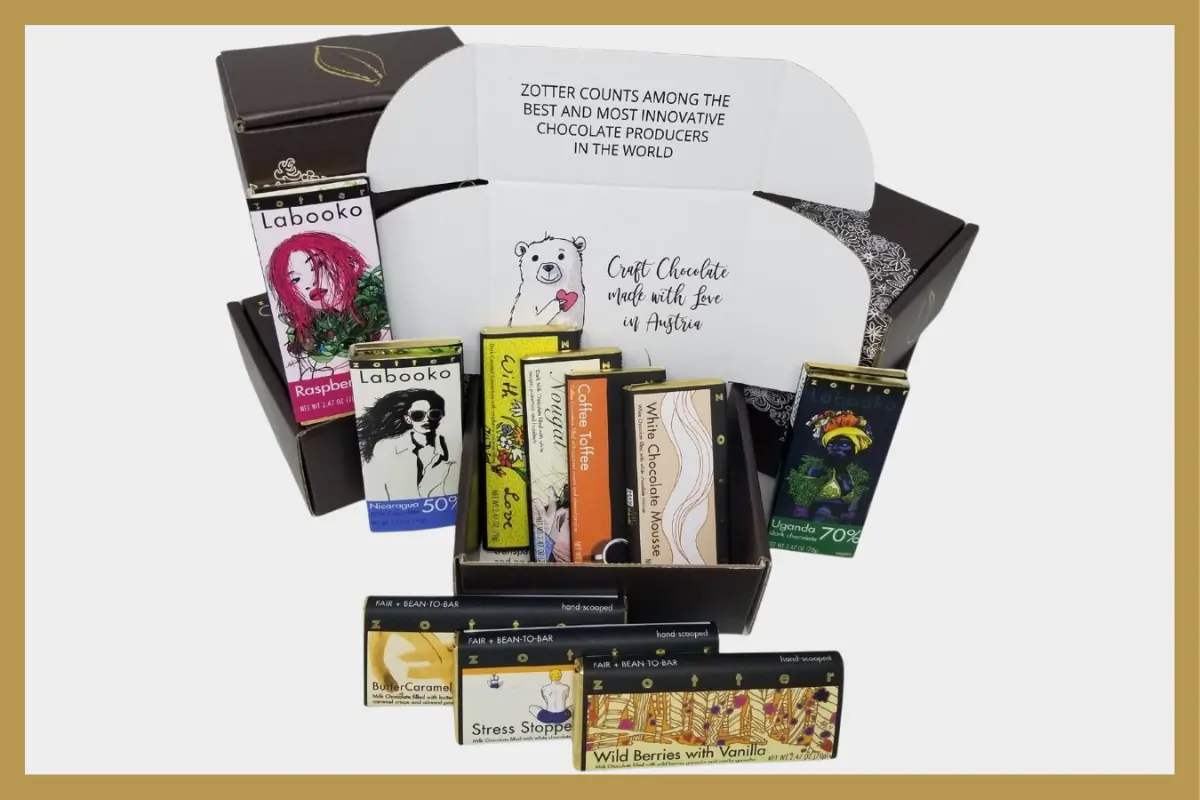
Zotter approaches that conversation with organic, fair trade chocolate and a delightfully unconventional instinct for flavor. The result is chocolate made for people who want their indulgence to be both delicious and distinctly their own.
Which Should You Choose?
Choose hand-scooped chocolate when you want a longer tasting experience and a flavor combination with room to develop. It is an especially strong choice for the curious eater who sees chocolate as a small culinary adventure, or for the recipient who would rather savor a few substantial pieces than work through a conventional assortment.
Choose pralines when the occasion calls for elegant variety. They suit dinner-party hosts, traditional luxury gifts, and anyone who enjoys sampling several distinct centers. Their individual portions also make them wonderfully easy to share.
There are practical differences, too. A filled bar may travel more easily in a gift bag and can be broken into portions as desired. Pralines have an immediate sense of occasion, but their delicate shapes and finishes benefit from careful handling. For either one, freshness matters. Store fine chocolate in a cool, dry place away from sunlight and strong odors, not in the refrigerator unless your climate leaves no reasonable alternative.
If dietary needs are part of the decision, read beyond the front label. Both formats can contain dairy, nuts, gluten-containing ingredients, alcohol, or other allergens, depending on the recipe. Vegan options can be extraordinary, but they should be chosen for their flavor and ingredient quality, not treated as a compromise.
The Better Question Is What You Want Chocolate to Do
Hand-scooped chocolate and pralines are not rivals so much as two expressions of confectionery craft. One invites you into a layered composition that can be bold, playful, and unexpectedly textured. The other delivers an intimate, polished bite with the pleasure of choice built in.
When selecting a gift, consider the recipient’s chocolate personality. Do they linger over flavors, talk about ingredients, and reach for the surprising combination first? A hand-scooped bar may be the memorable answer. Do they love a beautiful box, a classic ritual, and the possibility of trying one more piece? Pralines may be exactly right.
The most rewarding choice is the one that makes someone pause after the first bite – not because it is merely sweet, but because it has something worth tasting twice.