

You can taste the difference before you know the vocabulary. One square feels flat, very sweet, and familiar. Another opens slowly – fruit, spice, roasted notes, creaminess, a lingering finish. That is the real starting point for bean to bar vs mass market chocolate: not marketing language, but what happens on your palate.
For shoppers who care about craftsmanship, ingredient quality, and where cocoa comes from, this comparison matters. Chocolate is not just a candy category. At the premium end, it is an ingredient-driven food with origin, technique, and personality. And once you understand what separates bean-to-bar from mass-market production, it becomes much easier to choose chocolate that matches your standards, your curiosity, and the kind of experience you actually want.
What bean to bar vs mass market really means
Bean-to-bar chocolate begins with the cocoa bean. The maker sources beans, roasts them, refines them, and turns them into finished chocolate under one roof or under closely controlled production. That level of involvement creates far more influence over flavor, texture, and sourcing standards.
Mass-market chocolate works differently. Large manufacturers usually buy cocoa and other commodity ingredients at scale, formulate for consistency across huge volumes, and optimize for broad appeal, shelf stability, and price accessibility. That does not make it automatically bad. It does mean the priorities are different.
Bean-to-bar asks, what is the most expressive, delicious version of this chocolate? Mass market often asks, what is the most efficient, reliable version for the widest possible audience? Both have a place, but they are not aiming at the same result.
The cocoa itself is the biggest dividing line
If you only remember one difference, make it this one: better chocolate starts with more intentional cocoa sourcing.
In bean-to-bar production, cocoa is often selected for origin, harvest quality, fermentation, and flavor profile. Just as coffee and wine reflect where they are grown, cacao does too. Beans from one region may lean red-fruit bright, while another may bring nutty depth, floral notes, or earthy intensity. A maker who controls the process can preserve those distinctions rather than blending them away.
Mass-market chocolate usually depends on large-scale sourcing designed to produce a stable, repeatable flavor year after year. That consistency is useful, especially for a mainstream customer who wants the same taste every time. The trade-off is that origin character can become less visible. Chocolate becomes more generic, less expressive, and often more dependent on sugar, milk, vanilla, or added flavors to shape the final result.
For premium chocolate buyers, that loss is significant. When cocoa is treated as a commodity, chocolate tends to taste simpler. When cocoa is treated as a primary ingredient with its own voice, the bar can become far more memorable.
Flavor is where bean-to-bar pulls ahead
A good bean-to-bar bar rarely tastes like only sweetness. It unfolds in layers. You may notice fruit, caramel, citrus, toasted nuts, cream, spice, or even tea-like and floral notes, depending on the cacao and the recipe. Those flavors do not need to be loud to be distinctive. The pleasure often comes from complexity and balance.
Mass-market chocolate tends to be engineered for immediate familiarity. It is often sweeter, sometimes waxier, and usually less nuanced. That can be comforting. There is a reason mainstream chocolate is widely loved. But if you are seeking a more refined tasting experience, the gap becomes obvious.
This is especially true in dark chocolate, where there is less milk and sugar to hide what the cocoa is doing. In premium bean-to-bar bars, cacao percentage is only part of the story. Two 70% bars can taste entirely different depending on origin, roast, conching, and ingredient quality. In mass-market formats, percentages can signal intensity, but not necessarily character.
Texture tells you a lot about quality
Chocolate should not just taste good. It should feel good.
Bean-to-bar makers usually spend serious time refining texture so the chocolate melts evenly and cleanly. You notice it in the snap, the silkiness, and the way flavors release across the palate. Fine chocolate can feel polished without feeling generic.
Mass-market chocolate often prioritizes durability and consistency over delicacy. That may mean a bar that survives shipping, storage, and long shelf time more easily, but it can also mean a heavier mouthfeel or a finish that disappears quickly. Additional emulsifiers or formulation shortcuts may support production goals, though they do not always support the best sensory experience.
Again, it depends on what you want. If you are grabbing a quick candy fix at a checkout line, texture may not be your first concern. If you are buying chocolate as a gift, pairing it with coffee or wine, or savoring a square after dinner, texture matters a great deal.
Ingredients: shorter lists, clearer intent
Bean-to-bar chocolate often comes with a more transparent ingredient philosophy. Many premium bars rely on cocoa mass, cocoa butter, sugar, milk powder if applicable, and carefully chosen inclusions when the recipe calls for them. The goal is not to strip away creativity. It is to build flavor on a strong foundation.
Mass-market chocolate can include more additives to support shelf life, cost control, texture management, and large-scale manufacturing. That is standard industry practice, and it helps keep products affordable and widely available. Still, shoppers looking for cleaner labels, organic ingredients, or a more ingredient-led product often prefer bean-to-bar for a reason.
This is also where premium brands can become more exciting rather than merely more minimal. Once the chocolate base is excellent, adventurous flavors have a better stage. Nuts, fruit, spices, coffee, nougat, ganache, or unexpected savory notes can feel elevated instead of gimmicky.
Ethics are not a side note
For many American shoppers, bean to bar vs mass market is also a question of values.
Bean-to-bar makers are more likely to foreground sourcing relationships, fair trade commitments, organic standards, and traceability. That does not mean every small maker is perfect or every large company is careless. It does mean smaller-scale premium chocolate often treats ethical sourcing as part of the product itself, not just a compliance box.
That matters because cocoa has a long history of pricing pressure and supply chain opacity. When a brand invests in better sourcing standards, it is supporting a more respectful model for growers and farming communities. You may pay more at the register, but you are often paying for more than flavor alone.
For conscious consumers, that premium is easier to justify when the chocolate delivers both taste and transparency. A bar that is organic, fair trade, and genuinely delicious feels like a better kind of indulgence.
Why mass-market chocolate still dominates
Price and convenience are powerful. Mass-market chocolate is everywhere, usually inexpensive, and familiar to nearly every shopper. It performs a different job very well. If you need something easy, sweet, and consistent, it is accessible in a way artisan chocolate rarely is.
That broad accessibility should not be dismissed. Not every moment calls for a tasting experience. Not every shopper wants to analyze origin notes or compare roast profiles.
But there is a reason premium chocolate keeps winning devoted fans. Once people experience chocolate with real depth, many do not want to go back to bars that taste one-dimensional. The shift is similar to what happens when someone moves from generic coffee to specialty coffee. The everyday version still exists. It just no longer feels like the whole category.
When bean-to-bar is worth the higher price
The simple answer is this: bean-to-bar is worth it when you want chocolate to be part of the experience, not just a quick sugar delivery system.
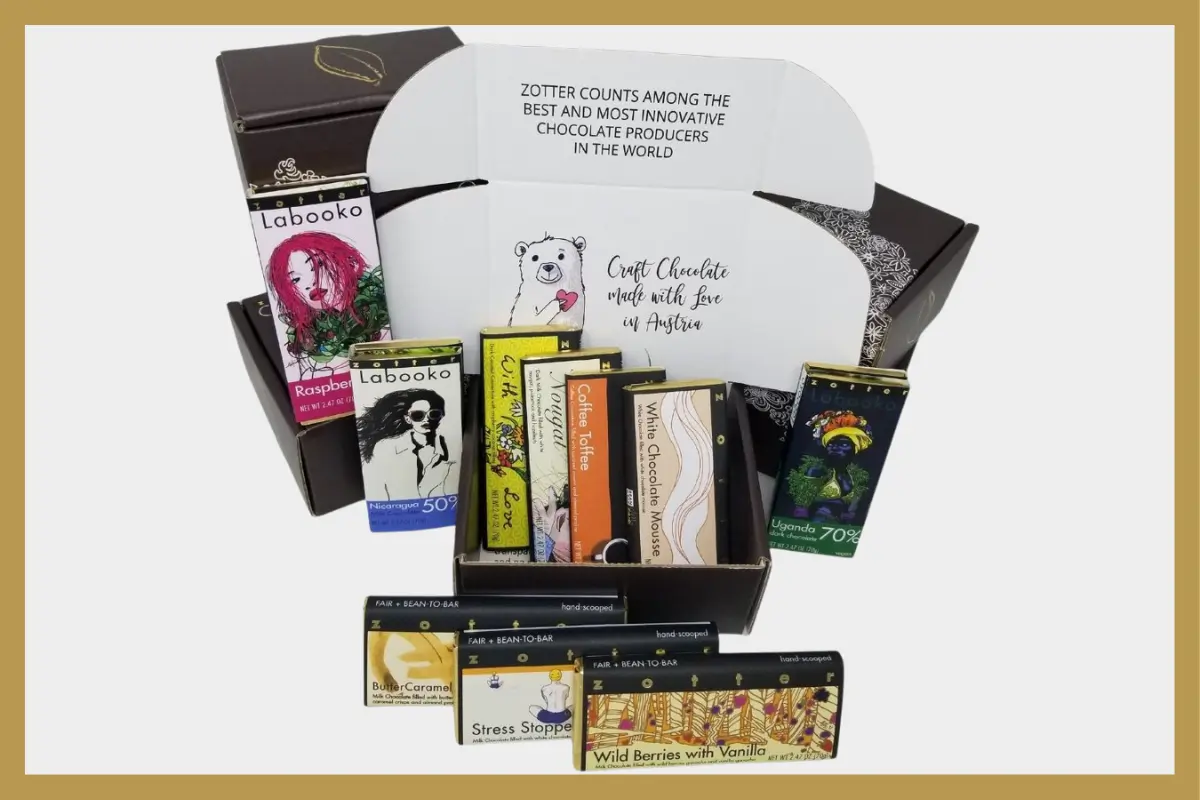
It shines in gifting, entertaining, pairing, and personal rituals. A thoughtfully made bar feels elevated. It can carry origin character, a more beautiful finish, and a stronger sense of intention. That is especially true when a maker combines ethical sourcing with artistic creativity, as premium brands like Zotter have built their reputation on doing.
It is also worth it when dietary preferences or ingredient standards matter to you. If you are looking for organic chocolate, vegan options, inventive flavor combinations, or a curated assortment that feels special, mass-market shelves tend to narrow quickly.
Still, worth is personal. Some shoppers want an affordable pantry staple. Others want a chocolate worth slowing down for. Neither instinct is wrong. They simply point to different categories.
How to shop smarter between the two
If you are choosing between bean-to-bar and mass-market chocolate, ask what matters most in that moment. Is it price? Flavor complexity? Ethical sourcing? Gift appeal? Ingredient quality? Once you know your priority, the right choice becomes clearer.
You can also start small. Try a pure dark bar from a bean-to-bar maker next to a mainstream dark bar of a similar cacao percentage. Pay attention to aroma, melt, sweetness, and finish. Then try a filled or flavored artisan bar and notice how much more vivid the chocolate base feels when the maker is not relying on sugar alone.
That is often the turning point. You stop thinking of premium chocolate as expensive candy and start seeing it as a crafted food.
The best chocolate does more than satisfy a craving. It gives you something to notice, something to remember, and sometimes something to feel good about buying again.