
A great organic chocolate review should make you hungry, certainly. But it should also tell you what the bar is made of, where its character comes from, and whether the experience earns its premium price. Organic is a meaningful starting point, not a shortcut to extraordinary flavor. The memorable bars pair carefully grown cacao with precise roasting, thoughtful recipes, and the kind of texture that makes you pause before the next square.
For chocolate lovers, this distinction matters. A bar can carry an organic seal and still taste flat, overly sweet, chalky, or anonymous. Conversely, a beautifully made organic bar can reveal bright fruit, toasted nuts, warm caramel, gentle spice, or the deep, lingering bitterness that makes dark chocolate so captivating. Here is how to review organic chocolate with more confidence and more pleasure.
What an Organic Chocolate Review Should Examine
The first question is not simply, “Is it organic?” Ask what organic means within the entire chocolate-making process. Organic cacao is grown according to standards that restrict synthetic pesticides and fertilizers. That supports a more considered agricultural approach, but the certification alone cannot describe the farmer relationship, the flavor potential of the beans, or the care taken after harvest.
Look for a fuller story. Is the chocolate also fairly traded? Is it bean-to-bar, meaning the maker works directly with cacao beans rather than relying only on industrial couverture? Does the brand identify the cacao origin or share details about its production? These signals do not guarantee that every bar will suit your palate, but they give a review real substance.
There is a useful trade-off to keep in mind. Single-origin chocolate can be wonderfully expressive, showing the particular personality of cacao from Peru, Madagascar, or elsewhere. A blended bar may be designed for consistency or balance, and it can be just as delicious. Origin is not a trophy. It is an invitation to taste more closely.
Read the Ingredient List, Then Read Between the Lines
Premium organic chocolate often has a refreshingly short ingredient list: cacao mass, cocoa butter, sugar, and perhaps vanilla. That simplicity is especially revealing in a dark bar, where there is nowhere for poor-quality cacao or excessive sweetness to hide.
Filled chocolate calls for a different lens. A complex hand-scooped bar may include fruit, nuts, nougat, coffee, spices, spirits, or a soft ganache center. More ingredients are not a flaw when each one has a purpose. The question is whether the filling creates contrast and clarity, or merely covers up the chocolate.
Pay attention to the source of sweetness, too. Coconut sugar, raw cane sugar, honey, and refined sugar each bring a different flavor and texture. Alternative sweeteners can be appealing, but they are not automatically better tasting. In a truly fine bar, the sweetness should support the cacao rather than sit heavily on top of it.
Start With the Snap, Finish With the Aftertaste
Before tasting, break off a piece. Well-tempered chocolate should offer a clean snap, particularly in a solid dark or milk bar. It should not bend like wax or crumble into dusty fragments. A glossy surface is another encouraging sign, although a little bloom can happen when chocolate experiences temperature shifts and does not always mean it is unsafe to eat.
Let the piece melt slowly instead of biting immediately. Fine chocolate changes in stages. You may taste roasted cacao first, then red berries, citrus, malt, cream, honey, coffee, or a hint of tobacco-like depth. With milk chocolate, the dairy should feel integrated and silky, not cloying. With white chocolate, cocoa butter should bring richness and structure rather than leaving an oily finish.
Texture tells its own story. Is the melt smooth and luxurious? Does the bar feel gritty, dry, or waxy? Does a filling stay distinct from its chocolate shell? An exceptional filled bar has a sense of proportion: the shell gives way with a satisfying break, and the center arrives as a deliberate second act.
The finish is often the deciding moment. A fine organic chocolate should leave flavor behind, not a coating of sugar or fat. Bitterness can be elegant when it is balanced by acidity, fruit, sweetness, or roast. If the flavor disappears instantly, or if it turns aggressively astringent, the bar may not be as refined as its packaging suggests.
Cacao Percentage Is a Clue, Not a Score
It is tempting to treat a higher cacao percentage as a marker of superiority. In reality, 100% cacao is not inherently better than 70%, and a 50% milk chocolate can be just as sophisticated as an 85% dark bar. Percentage tells you roughly how much of the recipe comes from cacao ingredients, but it does not explain bean quality, roast profile, sugar balance, or craftsmanship.
For many tasters, 60% to 75% is a rewarding place to begin with dark chocolate. It often offers complexity without overwhelming bitterness. Those who enjoy intense, less-sweet bars may prefer 80% and above. If you are new to artisan chocolate, try a range rather than forcing yourself toward the darkest option. Pleasure is a better guide than bragging rights.
How to Judge Organic Filled Chocolate
Filled bars deserve their own category because their ambition is different. They are not just chocolate bars with extra ingredients. At their best, they are small edible compositions: a tart fruit layer against dark cacao, a nutty praline softened by milk chocolate, or a spirited ganache with a clean cocoa finish.
A strong review considers whether the flavor name matches the tasting experience. If a bar promises raspberry, the fruit should be recognizable without tasting like candy. If it promises coffee, the coffee should bring roasted depth rather than bitterness alone. If chili appears in the recipe, it should build gradually and leave room for the cacao to speak.
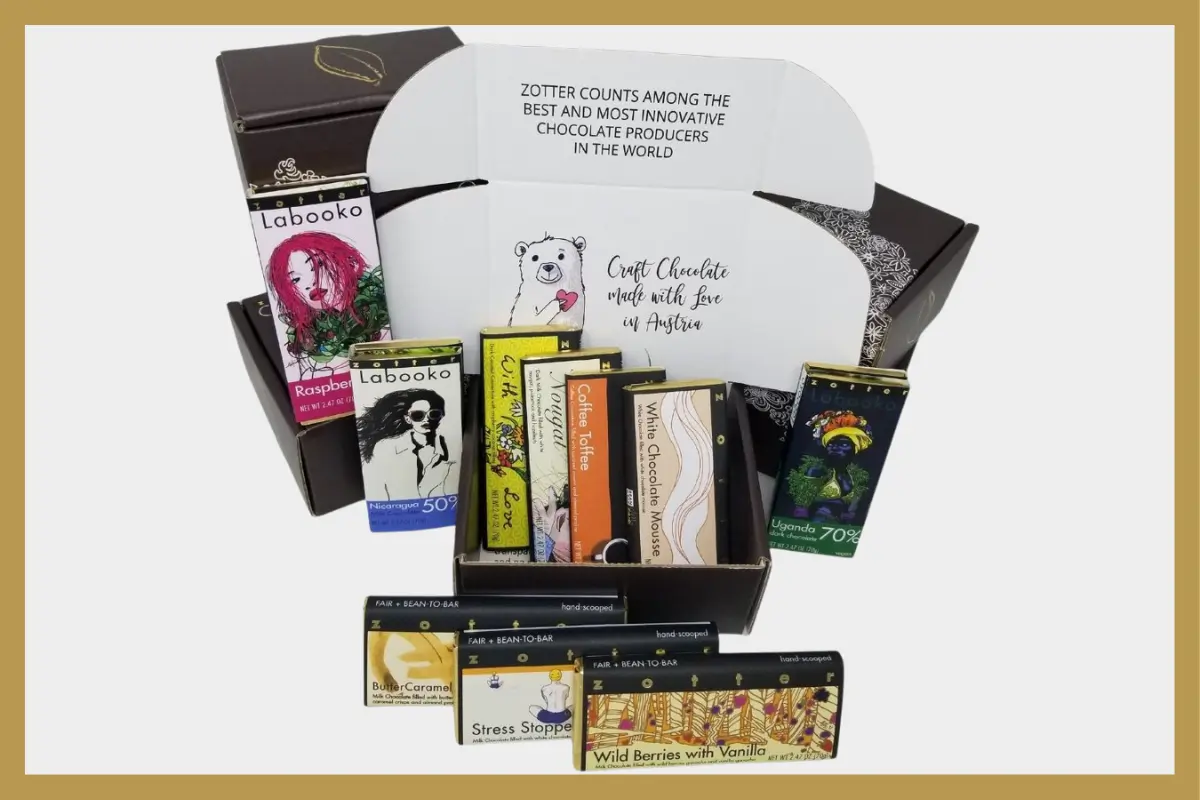
This is where adventurous makers stand apart. Zotter has built a reputation for treating chocolate as a creative medium, with hand-scooped bars that range from familiar comforts to decidedly unexpected pairings. The best approach is to choose a few flavors across your comfort zone: one pure chocolate bar, one fruit-forward creation, and one savory, spicy, or spirited bar. You will learn more from contrast than from tasting five versions of the same profile.
Ethical Claims Worth Looking For
Organic certification addresses how ingredients are produced, while fair trade certification addresses important social and economic standards in the supply chain. Both matter, and neither should be reduced to a decorative badge. Cacao farming is demanding work, and chocolate’s true cost has historically been hidden behind low shelf prices.
When reviewing a premium bar, consider whether the brand makes its sourcing commitments visible and specific. Clear certification information, transparency about cacao origins, and a long-term emphasis on responsible production all add weight to a luxury purchase. Ethical sourcing does not make flavor irrelevant. It makes a remarkable flavor experience feel more complete.
Packaging also deserves a brief look. A gift-worthy bar should protect delicate chocolate from light, heat, and breakage while giving the customer useful information. Excessive packaging can feel out of step with an organic promise, though elaborate presentation may be appropriate for a special gift or a multi-bar tasting set. Context matters.
A Better Way to Taste and Compare
Taste chocolate at room temperature, ideally after water or a plain cracker, rather than directly after coffee, wine, mint gum, or a strongly seasoned meal. Compare no more than three bars at once. Begin with the least intense bar and move toward darker, bolder, or more heavily flavored choices.
Take a few notes, but keep them human. Write down the first flavor you notice, the texture, the sweetness level, and what stays with you afterward. Then add the only question that truly matters: would you want another square tomorrow? A technically impressive bar is not always the one you will reach for again.
For gifting, variety is often more valuable than certainty. A discovery assortment lets the recipient meet a maker through several cacao percentages, origins, and fillings, while a single exquisite bar is ideal when you know their tastes. Vegan chocolate deserves the same thoughtful attention as dairy-based chocolate: assess its melt, balance, and flavor rather than treating it as a compromise.
The most satisfying organic chocolate is not trying to persuade you with a label alone. It gives you a reason to slow down, taste with curiosity, and share the square that surprised you most.