

A search for lowest sugar chocolate can lead to a surprising shelf of promises: 100% cacao, no added sugar, keto-friendly, dark, reduced sugar. Those terms are not interchangeable, and the bar with the smallest sugar number is not automatically the most satisfying one. For chocolate lovers who care about flavor as much as ingredients, the better question is this: what kind of sweetness, texture, and cacao character do you want in the experience?
A truly memorable bar should never feel like a compromise disguised in a wrapper. It can be intensely cacao-forward, beautifully balanced, and made with a short, thoughtful ingredient list. It can also contain some sugar. The right choice depends on whether your priority is the lowest possible sugar, less added sugar than a conventional candy bar, or a luxurious chocolate ritual with a more measured sweetness.
What “Lowest Sugar Chocolate” Actually Means
There is no single official category called lowest sugar chocolate. It is a comparison, and the answer changes depending on what you compare: a full bar, a serving, 100 grams, or a piece of filled chocolate. Start by looking at the Nutrition Facts panel and compare products using the same serving size. A bar that appears lower in sugar may simply list a smaller serving.
The lowest-sugar end of the spectrum is usually unsweetened chocolate made from 100% cacao. It may contain zero grams of sugar, but it is unapologetically intense: earthy, roasted, fruity, nutty, tannic, or pleasantly bitter depending on the cacao and the maker. For some palates, that is exactly the point. For others, it is better used in baking, grated over yogurt, or paired with fruit and cheese rather than eaten square after square.
Dark chocolate with a high cacao percentage is often the next place to look. As cacao content rises, there is generally less room in the recipe for sugar. But “generally” matters. A 70% bar is not necessarily lower in sugar than every 65% bar, especially when portions differ or a recipe includes milk powder, fruit, caramel, or a creamy filling.
The key distinction is between total sugars and added sugars. Total sugars include naturally occurring sugars from ingredients such as milk or fruit. Added sugars are introduced during production to sweeten the chocolate. Both figures can be useful, but neither tells the entire story of flavor, quality, or how a bar will fit your preferences.
Cacao Percentage Is a Clue, Not a Verdict
Cacao percentage is one of chocolate’s most useful shorthand signals. In a dark bar, it represents the total proportion of cacao ingredients, typically cocoa mass and cocoa butter. A higher percentage often means a darker profile and less sugar, but it does not tell you the cacao origin, roast style, texture, or ingredient quality.
An 85% chocolate can be remarkably elegant when the cacao has ripe fruit notes and the maker has achieved a fine, slow melt. Another 85% bar can taste harsh, dry, or flat. Lower sugar reveals more of the bean, so craftsmanship becomes even more visible. There is nowhere for excess vanilla, sweetness, or heavy processing to hide.
Milk chocolate deserves a fair hearing, too. It usually contains more sugar than dark chocolate because milk ingredients and sugar create its familiar creamy sweetness. Yet a premium milk chocolate made with excellent cacao and carefully balanced dairy can offer a more nuanced experience than a generic dark bar. If your goal is the absolute minimum sugar, milk chocolate is rarely the first choice. If your goal is a smaller, deeply satisfying indulgence, a well-made milk bar can still earn its place.
Filled bars require a separate calculation. Ganache, praline, nougat, fruit layers, cookie pieces, and caramels can raise the sugar content, even when the outer shell is dark chocolate. That does not make them lesser chocolates. It simply means they belong in the category of creative confectionery rather than the lowest-sugar option.
A practical cacao range to consider
For everyday dark chocolate eating, many people find their personal sweet spot between 70% and 85% cacao. The lower end often feels rounded and approachable, with enough sweetness to amplify fruity or caramel-like notes in the cacao. The upper end usually offers a bolder, more restrained profile with less sugar per serving.
Above 90%, chocolate becomes a more specialized pleasure. It can be extraordinary with the right bean and the right palate, but it asks you to enjoy bitterness, acidity, and roast character rather than expect a classic sweet treat. If you are moving away from sweeter chocolate, try tasting upward in stages rather than starting at 100% and deciding dark chocolate is not for you.
Read the Label Like a Chocolate Buyer
The ingredient list offers as much insight as the sugar line. In a straightforward dark chocolate, you may see cacao mass, cocoa butter, and sugar, with perhaps vanilla. That brevity is not a guarantee of excellence, but it makes it easier to understand what you are tasting.
When comparing lower-sugar options, look beyond marketing language and consider the complete recipe. “No added sugar” can mean the product is sweetened with dates, fruit concentrates, stevia, monk fruit, or sugar alcohols. These choices can work well for some shoppers, but they change the flavor and sometimes the finish. Certain sugar alcohols may also cause digestive discomfort when eaten in larger amounts, so portion size is worth respecting.
A chocolate sweetened with alternatives is not automatically lower in calories, nor is it automatically more delicious. Some have a cooling sensation or a lingering aftertaste. Others are impressively balanced. The only dependable route is to read the label, understand the sweetener, and choose based on your own taste and dietary needs.
Also notice the serving size before assigning a moral score to a number. Chocolate is designed to be savored. A few exceptional squares of an intense bar can feel more complete than a large portion of something sweeter and less expressive. That is not a rule about restraint. It is an invitation to choose chocolate with enough character to hold your attention.
How to Make Low-Sugar Chocolate Taste Better
The most rewarding low-sugar chocolate is often served with a little intention. Temperature matters. Chocolate straight from the refrigerator can seem dull and overly hard, while a bar brought closer to room temperature releases more aroma and a silkier melt. Break off a small piece, let it rest on your tongue, and notice how its first impression changes into deeper notes.
Pairing can make high-cacao chocolate feel more generous without adding much sweetness. Coffee emphasizes roasted notes; unsweetened tea can highlight floral or citrus character. A few raspberries, roasted almonds, or a slice of pear offer contrast. Aged cheese brings salt and richness, while a pinch of flaky salt can soften the perceived bitterness of a dark bar.
This is especially useful when you are exploring chocolate above 80% cacao. Instead of expecting it to behave like a sweet snack, treat it as you would a fine espresso or a distinctive wine: something with origin, structure, and a point of view.
When the Lowest Number Is Not the Best Choice
Choosing the lowest sugar chocolate makes sense for many reasons, including managing added sugar, preferring darker flavors, or following a specific eating pattern. But the lowest number is not always the most suitable choice. Someone seeking a dairy-free option will need to check more than sugar. Someone with allergies should review the full ingredient and allergen statement. A gift recipient may be more delighted by an adventurous filled bar than by an austere 100% cacao tablet.
Ethics belong in the decision, too. Cacao is an agricultural ingredient shaped by farmers, fermentation, drying, transport, and skilled chocolate making. Organic and fair trade sourcing, transparent values, and bean-to-bar production do not reduce the sugar number on their own, but they can make a chocolate purchase feel more considered. Luxury is not just richness. It is the care behind every choice.
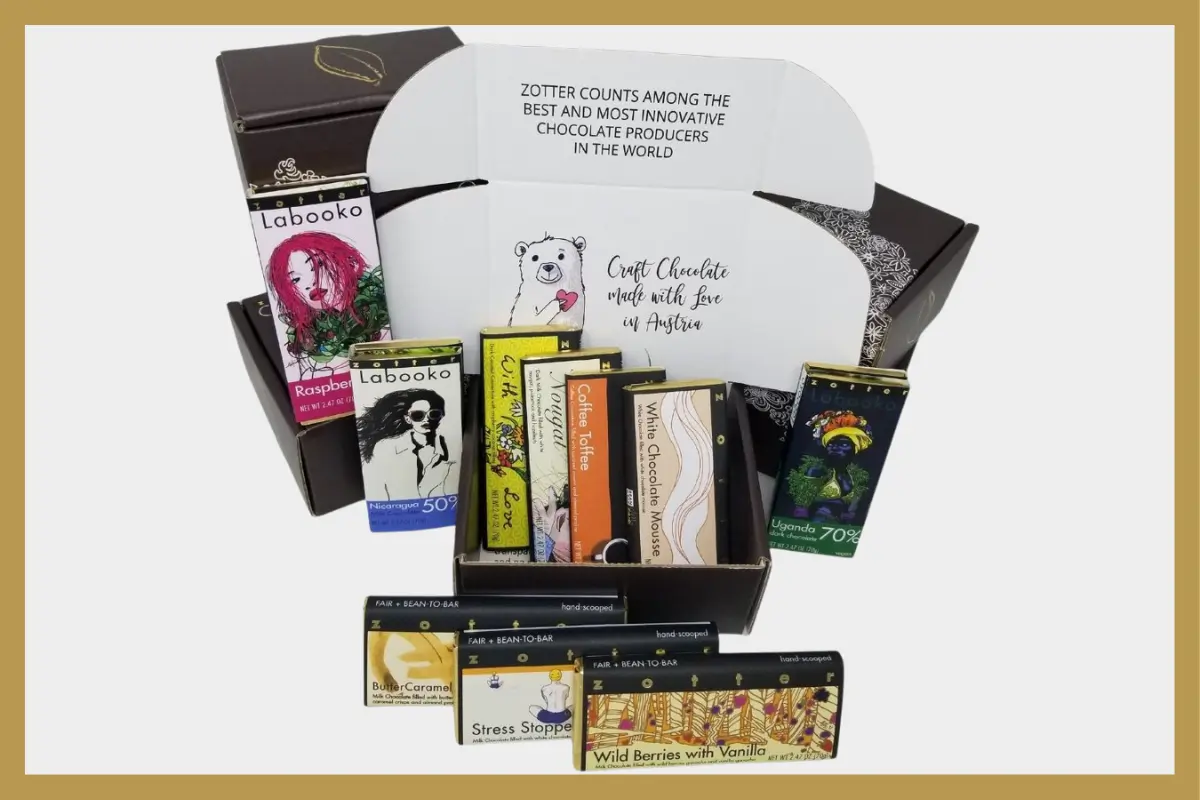
For shoppers who want both discovery and discernment, Zotter’s wide-ranging assortment makes it possible to taste across cacao styles, dark chocolate intensities, and unexpected flavor combinations without pretending every bar serves the same purpose. A pure, high-cacao bar and an artfully filled creation can both be exquisite. They simply answer different cravings.
The best place to begin is with the label and your own palate. Choose a cacao percentage that feels inviting, compare sugar on an equal serving basis, and let yourself savor the result slowly. The most satisfying chocolate is not always the one with the lowest possible number. It is the one whose flavor is vivid enough that one thoughtful square feels like an occasion.