
A perfectly made filled chocolate bar has a brief, glorious moment of suspense: the clean snap of the shell, the first melt of cocoa, then the center revealing itself. That sense of surprise is why the best Austrian chocolate is not simply a sweet treat. It is a small, high-end tasting experience – one that can be nutty, fruity, dark, creamy, spicy, or wonderfully unexpected.
Austria has long taken confectionery seriously, with a chocolate culture shaped by café tradition, skilled pastry work, and a love of refined indulgence. But choosing a memorable bar takes more than reaching for an elegant wrapper. For US shoppers, the most rewarding choice comes down to the quality of the chocolate itself, the thought behind the filling, the integrity of the ingredients, and what you want the bar to do: satisfy a personal craving, anchor a tasting night, or make a gift feel genuinely considered.
What Makes the Best Austrian Chocolate?
There is no single bar that is best for everyone. A serious dark-chocolate fan may want an expressive single-origin bar with a bright fruit note and a long finish. Someone shopping for a host gift may prefer a beautifully layered filled bar that feels festive from the first bite. A vegan shopper deserves more than a compromise, and may gravitate toward a dark chocolate or a plant-based filling with real texture and character.
The common thread is intention. Great Austrian chocolate is made to be tasted, not hurried. It should have a pleasant texture, a clean melt, and flavors that feel distinct rather than generically sweet. In filled chocolate, the shell and center should work together. A rich ganache should not flatten the cacao. A fruit filling should taste like fruit, not candy. A crunchy layer should still leave room for the chocolate to speak.
A premium bar also earns its place through restraint. More ingredients do not automatically mean more pleasure. The best combinations use contrast with purpose: dark chocolate against a bright berry center, mellow milk chocolate with toasted nuts, or a savory note that sharpens caramel’s sweetness. Playful flavors can be thrilling, but balance is what makes you reach for another square.
Start With the Chocolate Itself
Before considering a filling or flavor concept, look at the chocolate base. Cacao percentage is useful, but it is not a scorecard. A 70% dark chocolate can be velvety and approachable, while an 80% bar may be intensely roasted, floral, or tangy depending on the beans and the maker’s style. Higher percentage often means less sugar, but it does not guarantee a better bar. The quality of the cacao and the care taken in processing matter more.
For a first tasting, dark chocolate in the 60% to 70% range often offers a generous middle ground. It has enough cacao depth to show character while remaining welcoming for people who usually choose milk chocolate. If you prefer a bolder, less sweet finish, explore higher-percentage dark bars. Take your time with them. Let a small piece melt instead of chewing immediately, and notice whether the flavor moves from cocoa to fruit, nuts, spice, or coffee-like bitterness.
Milk chocolate deserves equal respect when it is made with excellent cacao and thoughtful proportions. The finest versions are not merely sugary. They can be creamy, caramel-like, malted, or gently nutty, with cocoa still present beneath the dairy richness. White chocolate can also be exquisite when it is built on real cocoa butter and given an ingredient with enough brightness or savor to offset its natural sweetness.
Bean-to-Bar Craft Changes the Experience
Bean-to-bar chocolate gives the maker greater control over the journey from cacao bean to finished bar. That control can shape roasting, texture, sweetness, and the final expression of the cacao. It is especially meaningful for shoppers who care about provenance rather than treating chocolate as an anonymous commodity.
Look for makers that communicate clearly about their cacao sourcing and production philosophy. Organic and fair trade certifications can offer valuable reassurance, but transparency goes beyond a seal. The most compelling brands treat farmers, ingredients, and craft as central to the product, not as an afterthought printed in tiny type on the package.
This is also where Austrian chocolate can feel especially distinctive. The country’s confectionery sensibility brings polish and pleasure to serious chocolate making. You can find deep, pure dark bars, but also an expansive world of carefully composed filled bars that feel closer to miniature desserts than conventional candy.
Filled Bars Are Austria’s Delicious Specialty
If you are buying Austrian chocolate for the first time, filled bars are an excellent place to begin. They make flavor visible and tangible. A well-made bar can hold layers of praline, nougat, fruit, marzipan, ganache, brittle, or cream within a fine chocolate shell. The format invites discovery without requiring an entire box of chocolates.
The trade-off is that fillings shift the experience away from pure cacao tasting. That is not a flaw. It is simply a different pleasure. Choose an unfilled origin bar when you want to compare cocoa profiles. Choose a filled bar when you want texture, surprise, and a more dessert-like moment.
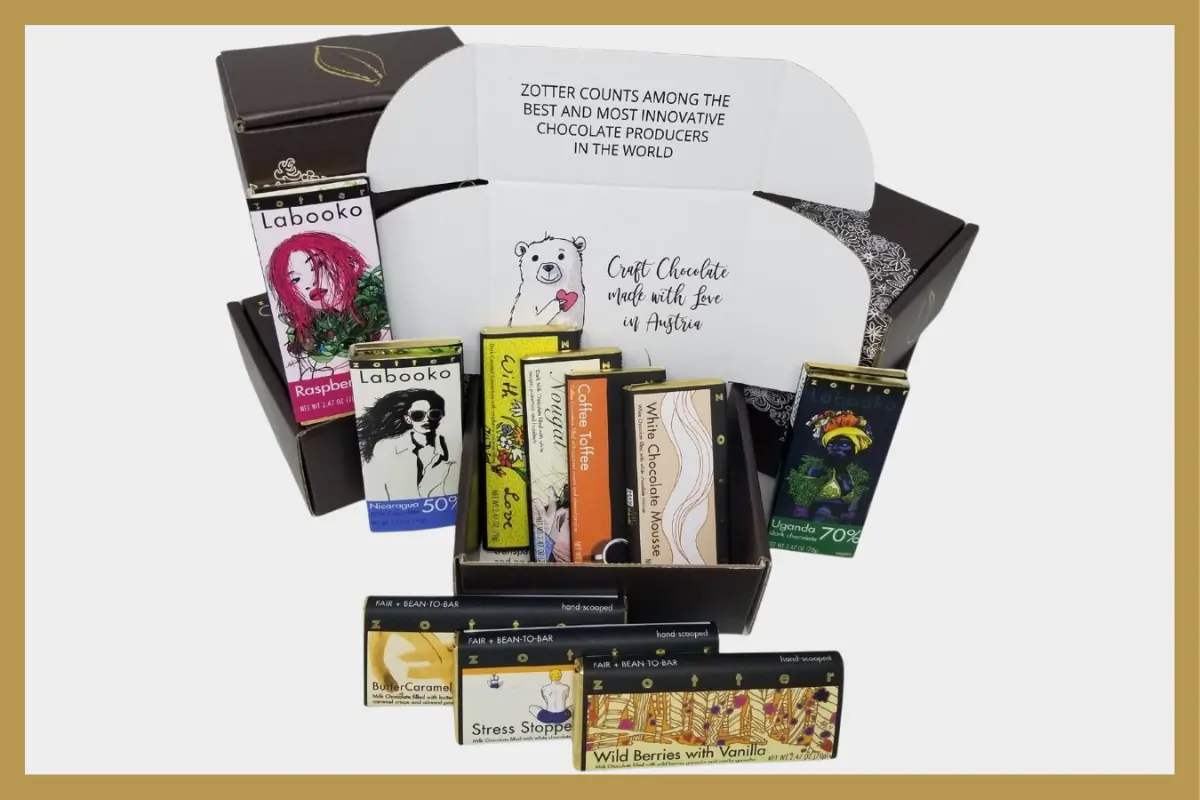
For adventurous palates, seek combinations that pair familiar comfort with one unexpected detail. A classic nut praline may become more memorable with sea salt. A fruit center can gain depth from spice. Coffee, spirits, herbs, and cheese-inspired notes can all work beautifully when the recipe is confident rather than gimmicky. Zotter is known for taking this creative route, offering hand-scooped bars that range from elegant classics to flavors that invite a second look at the label.
When giving filled chocolate, consider the recipient’s appetite for novelty. A sophisticated hazelnut or caramel bar is a confident choice for nearly anyone. A bar with chili, balsamic notes, or an unusual savory inclusion can be an unforgettable gift for the curious food lover. The best gift is not necessarily the rarest flavor. It is the one that says you paid attention.
How to Choose the Best Austrian Chocolate for the Occasion
For everyday indulgence, choose a bar you can enjoy in a few squares without flavor fatigue. Smooth dark chocolate, fine milk chocolate, or a simple nut-filled bar often fits the role beautifully. Keep it somewhere cool, dry, and away from strong odors. Chocolate does not need refrigeration unless conditions make it unavoidable, and cold temperatures can mute its aroma and affect texture.
For a tasting, variety matters more than quantity. Select a few contrasting styles: one pure dark bar, one milk chocolate, one fruit-forward filling, and one adventurous flavor. Taste from lighter to darker, and from delicate to intense. Water is usually better than coffee or wine for a first pass because it lets the chocolate’s own aromas stay in focus. If you do pair chocolate with a beverage, a lightly roasted coffee, black tea, or a dessert wine can be lovely, depending on the bar.
For gifting, presentation and confidence matter. A discovery assortment is ideal when you do not know someone’s exact preference, while a curated selection of favorite flavors feels more personal for a close friend or client. Seasonal collections are particularly useful when you want a gift that feels timely without being predictable. A premium chocolate gift should create anticipation before it is opened and pleasure after the final square.
Dietary needs deserve the same level of attention as flavor. Vegan chocolate may be naturally suited to dark cacao, but plant-based filled bars can offer equally rich and imaginative options. Check ingredients carefully for milk, nuts, gluten, alcohol, and other allergens, especially when choosing filled assortments. A beautiful bar is only a thoughtful gift if the recipient can enjoy it comfortably.
Let Freshness and Storage Protect the Craft
Luxury chocolate is at its best when treated gently. Heat is the obvious enemy, but humidity and strong pantry scents can also interfere with flavor. Store bars in a cool, dark cupboard, ideally around 60 to 68 degrees Fahrenheit, in their original wrapping. Avoid a sunny counter, a warm car, or a cabinet beside spices.
A pale, streaky surface can sometimes appear when chocolate has been exposed to temperature changes. This is called bloom. It may affect appearance and texture, but it is not usually a safety issue. Still, buying from a seller that handles and ships chocolate with care is worth it, especially during warm weather. Freshness is part of the luxury experience, not a minor logistical detail.
The next time you choose Austrian chocolate, trust your own palate as much as the label. Start with the cacao style you love, then allow one bar to surprise you. The right square can turn an ordinary afternoon, a dinner-party gift, or a quiet late-night pause into something far more deliciously memorable.