

A forgettable chocolate gift disappears in a day. The best chocolate tasting set lingers much longer – in the flavor, in the story, and in the sense that someone chose something with real character.
That is the difference between a random box of sweets and a tasting set worth buying. A true tasting experience should feel curated, not crowded. It should invite comparison, surprise the palate, and offer enough range to keep each piece distinct without turning the whole thing into a sugar blur.
For some shoppers, that means a refined introduction to dark chocolate percentages and cacao origins. For others, it means adventurous filled bars, unexpected pairings, or a luxurious gift that feels more personal than a standard assortment. The right choice depends on who is tasting, how they like to explore flavor, and whether the chocolate itself has the craftsmanship to justify the format.
What makes the best chocolate tasting set?
The best sets are built for contrast and progression. You want chocolates that reveal differences in cacao origin, roast, texture, sweetness, and finish. If every piece lands in the same flavor register, the tasting stops being a tasting and becomes simple snacking.
That is why curation matters more than sheer quantity. A large assortment can be exciting, but only if it has structure. A smaller collection with a clear point of view often delivers a better experience than a sprawling box filled with repetitive profiles.
Quality starts with the chocolate itself. Bean-to-bar production, careful conching, balanced sweetness, and thoughtfully sourced ingredients all show up in the final taste. Premium chocolate should not rely on packaging alone to feel special. It should have a clean snap, a composed melt, and flavors that unfold instead of flattening out.
Ethical sourcing also belongs in the conversation. For many premium shoppers, a tasting set is not only about indulgence. It is also about provenance, ingredient integrity, and whether the brand treats cocoa as an agricultural product with real value. Organic and fair trade standards do not automatically guarantee great flavor, but they often signal a more serious approach to chocolate making.
The best chocolate tasting set for different kinds of shoppers
Not everyone wants the same kind of tasting experience, and that is where many buyers get stuck. The best gift set for a curious beginner will not necessarily satisfy a serious dark chocolate enthusiast.
For the flavor explorer
If the joy is in discovery, look for a set with real variety. That can mean filled bars with layered textures, fruit and spice pairings, nut-forward profiles, or surprising savory notes. This style works especially well for people who want chocolate to feel playful, expressive, and a little unexpected.
The trade-off is that highly creative assortments can overshadow cacao nuance. If every piece includes an assertive filling or bold inclusion, the tasting becomes more about recipe design than the chocolate base. That is not a flaw – it is simply a different kind of luxury.
For the dark chocolate purist
A more focused tasting set built around origin bars or varying cacao percentages offers a cleaner comparison. Here, the details matter: red fruit versus earthy depth, toasted notes versus floral lift, silky melt versus firmer structure.
This kind of set appeals to shoppers who enjoy slowing down and noticing what changes from bar to bar. It can feel less instantly flashy than a mixed confection collection, but for many chocolate lovers, it is the more rewarding format.
For gifting
When the set is meant for someone else, presentation matters almost as much as taste. The best chocolate tasting set for gifting should feel polished, distinctive, and easy to enjoy without a lot of explanation.
A balanced assortment usually wins here. Too much austerity can feel niche, while too much novelty can be divisive. A giftable tasting set should offer enough familiarity to feel welcoming, with enough personality to feel memorable.
How to judge a tasting set before you buy
A premium assortment should tell you what makes it special. If the product description is vague, the chocolate often is too.
Start with composition. Does the set include different cacao percentages, multiple origins, or a mix of pure bars and filled creations? Good tasting sets do not just promise variety – they show how that variety is built.
Then consider ingredient standards. Organic ingredients, fair trade cocoa, and transparent sourcing are especially relevant in premium chocolate. They speak to quality, but also to intention. A carefully made tasting set should reflect care all the way back to the cocoa itself.
Pay attention to format as well. Bars are often better for comparative tasting than truffles or mixed candies because they make texture, melt, and cacao character easier to read. Filled bars can be exceptional, but they work best when the fillings are integrated rather than overwhelming.
Shelf stability and shipping are practical details, but they matter. Chocolate is sensitive. If you are buying during warmer months or for a time-sensitive gift, choose a brand that clearly communicates packing standards and delivery expectations. Luxury should feel reassuring, not risky.
Why curation beats excess
There is a common assumption that more pieces automatically means more value. In chocolate tasting, that is not always true.
Too many samples can fatigue the palate. Sweetness builds, subtle notes disappear, and halfway through the box everything starts to taste less distinct. A well-designed tasting set avoids that problem by giving each chocolate enough room to make an impression.
This is one reason discovery packs and curated assortments are so effective. They reduce decision fatigue while still offering range. For shoppers new to artisan chocolate, that kind of guidance is especially useful. It turns a broad category into a clear, pleasurable starting point.
For experienced buyers, curation signals confidence. It suggests the assortment was designed by people who understand how flavors relate to one another, not by marketers trying to maximize piece count.
What a great chocolate tasting experience should feel like
The best chocolate tasting set does more than provide good chocolate. It creates rhythm.
There should be an opening note that feels accessible, a few moments of contrast, and at least one chocolate that changes the mood of the tasting – something brighter, deeper, stranger, or more luxurious than expected. You want movement across the palate, not a row of near-identical bites.
Texture plays a bigger role than many shoppers realize. A set that combines silky dark bars, creamy milk chocolate, layered fillings, and the occasional crunch or fruit acidity feels more complete. Even when the focus is cacao, contrast keeps attention sharp.
This is where artisan makers have an advantage. They can build tasting sets around personality rather than mass appeal. That might mean origin specificity, hand-crafted fillings, or unconventional flavor combinations that still feel precise. When done well, the result is distinctive rather than gimmicky.
A note on adventurous assortments
Bold flavor combinations are one of the pleasures of premium chocolate, but they should still be balanced. Chili, coffee, spirits, fruit, florals, and nuts can all be extraordinary in the right hands. They can also become noisy if the chocolate underneath is not strong enough to hold them.
So if you are shopping for a more adventurous collection, look for a maker with clear chocolate credentials, not just creative flavor names. The most exciting tasting sets pair imagination with discipline. That is what turns experimentation into refinement.
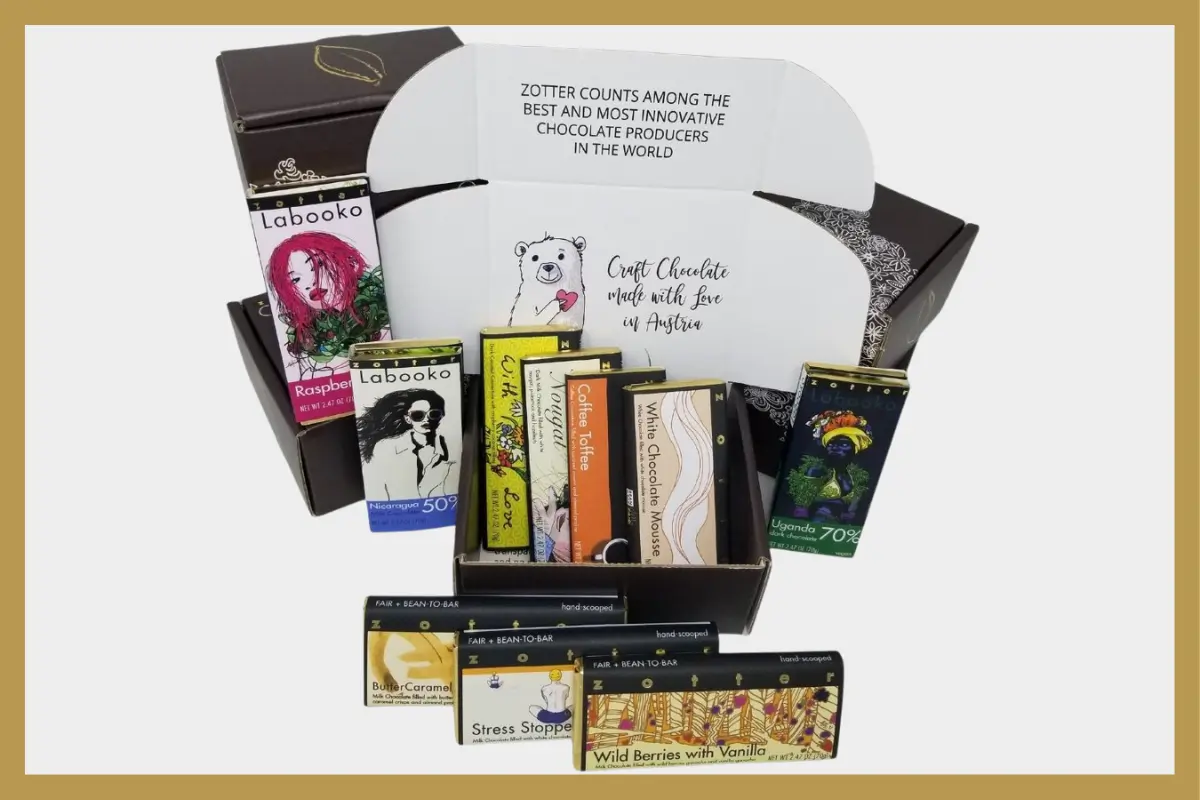
For shoppers who want both ethical craftsmanship and a broad sense of discovery, curated assortments from a brand like Zotter USA can be especially compelling. The appeal is not only the range of flavors, but the fact that the range is grounded in organic, fair trade, bean-to-bar chocolate with a distinctly artisan point of view.
Choosing the right set for the occasion
For a dinner party or shared tasting, variety matters because different palates will notice different things. A wider assortment gives the group something to talk about. For personal enjoyment, a more focused set can be better because it allows deeper comparison.
If you are buying for a holiday or milestone gift, presentation and accessibility should lead. If you are buying for a true chocolate enthusiast, transparency around cacao origin, ingredients, and style will matter more.
And if you are shopping for yourself, be honest about what you actually enjoy. There is no virtue in choosing an austere high-cacao set if what you love most is imaginative filled chocolate. The best tasting set is the one that invites you back for another piece because it feels thrilling, not obligatory.
A great chocolate tasting set should leave you with preferences, questions, and a few favorites you did not expect. That is when chocolate stops being a treat and becomes an experience worth remembering.