
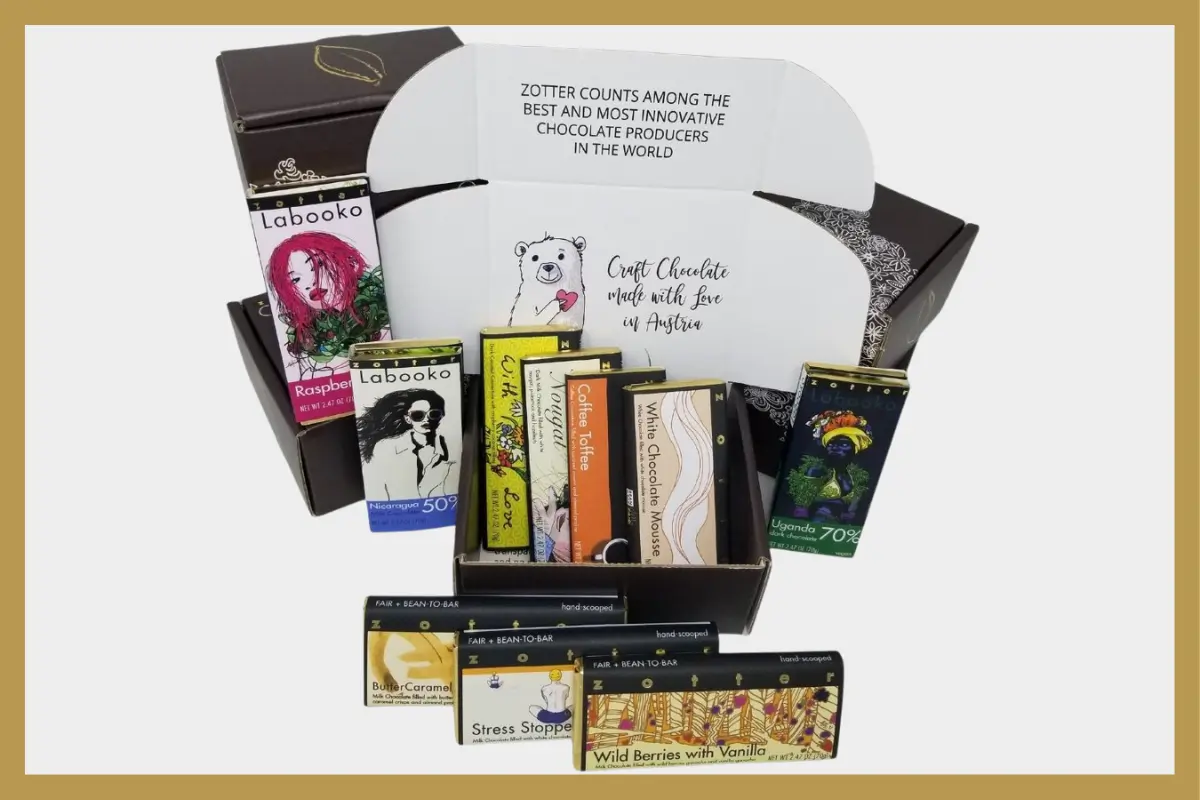

A beautiful bar can lose its snap in a single hot afternoon. A hand-scooped filling can pick up unwanted refrigerator odors. And the pale streaks sometimes seen on chocolate can make an exquisite gift look less than its best, even when it is still perfectly safe to eat. This chocolate storage guide is for protecting the details that make artisan chocolate worth savoring: the aroma, clean finish, silky melt, glossy surface, and surprising layers hidden inside.
Premium chocolate is not a pantry afterthought. It is a carefully balanced food made with cocoa butter, cocoa solids, sugar, and often delicate ingredients such as fruit, nuts, spices, coffee, spirits, or cream. Give it a calm, consistent environment, and it will reward you exactly as its makers intended.
The Ideal Temperature for Chocolate Storage
Chocolate is happiest in a cool, dry, odor-free place, ideally between 60°F and 68°F. A cabinet away from the oven, dishwasher, sunny window, and exterior wall is often a better choice than the most convenient spot on the counter. Consistency matters nearly as much as the number on the thermometer. Repeated warming and cooling puts stress on cocoa butter and can alter texture over time.
If your home runs warmer than 70°F, especially during a humid American summer, move chocolate to the coolest stable room you have. A temperature-controlled wine fridge can work well if it is not excessively humid and does not carry strong food aromas. Keep the chocolate in its original wrapper and place it inside an airtight container for another layer of protection.
The refrigerator is a backup plan, not the first choice. Its cold, humid conditions can encourage condensation when chocolate comes back to room temperature. That moisture may dissolve a trace of sugar on the surface, leaving behind a dusty or grainy coating once it dries. Refrigerator air also has a talent for sharing flavors. Chocolate should taste like cacao, roasted nuts, raspberry, or a daring pinch of chili – not leftover onions.
Should You Refrigerate Chocolate?
Sometimes, yes. If the alternative is a 78°F kitchen or a long stretch of tropical humidity, refrigeration is the smarter decision. This is particularly true for filled chocolates, seasonal assortments, and bars with more delicate inclusions. Protecting quality is more valuable than following a rule meant for a cooler climate.
The method is simple, but patience matters. Seal the wrapped chocolate in an airtight container or zip-top bag before refrigerating it. When you are ready to enjoy it, leave the container sealed on the counter until the chocolate reaches room temperature. Depending on the size, that can take one to two hours. Opening it too soon allows humid air to condense directly on the chocolate.
Avoid the freezer unless you need to store chocolate for an extended period and have no other option. Freezing can preserve chocolate, but it increases the risk of condensation, texture changes, and flavor pickup during thawing. If you do freeze it, wrap it tightly, place it in an airtight container, and thaw it gradually in the refrigerator before bringing it to room temperature.
Why Chocolate Turns White or Streaky
That white or grayish haze has two common causes, and neither usually means the chocolate has spoiled. The first is fat bloom. Cocoa butter rises to the surface after exposure to warmth, temperature swings, or imperfect storage, where it recrystallizes into a pale film or streaks. The second is sugar bloom, which happens when moisture dissolves surface sugar and leaves crystals behind as it evaporates.
Bloom changes appearance and may make the texture less velvety, but the chocolate is generally still enjoyable if it smells and tastes normal. In fact, bloomed chocolate is excellent for baking, drinking chocolate, sauces, or melting into a ganache, where its visual finish no longer matters.
The better strategy is prevention. Keep chocolate cool and dry, do not leave it in direct sunlight, and resist moving it repeatedly from a chilly room to a warm car and back again. A premium bar deserves more care than the glove compartment.
Store Each Style According to Its Ingredients
Not every chocolate has the same storage needs. A dark origin bar with a short ingredient list is usually the most forgiving. Its higher cocoa content and low moisture level give it a relatively stable shelf life when stored well. Milk chocolate and white chocolate contain more milk solids and can be more sensitive to heat and flavor transfer, though the same cool, dry conditions apply.
Filled bars and hand-scooped chocolates deserve extra attention. Their centers may include praline, nougat, caramel, fruit, dairy, or alcohol, all of which can affect how long the product stays at peak quality. Follow the date and storage guidance on the package, especially for pieces with fresh or creamy fillings. Once opened, reseal them carefully and enjoy them sooner rather than later, while the contrast between shell and filling is still vivid.
Chocolate with whole nuts, crisp inclusions, or freeze-dried fruit should also be kept airtight after opening. Oxygen and moisture can soften a crisp element, dull roasted nut flavors, or make fruit pieces less lively. The chocolate may remain safe, but the experience becomes less precise.
The Best Way to Store Opened Chocolate
Original packaging is often designed to do real work. Keep the inner wrap intact whenever possible, folding it tightly over the exposed edge. Then place the bar in an airtight container or reusable bag and store it in your chosen cool cabinet. This guards against air, humidity, and household aromas without requiring elaborate equipment.
If you are saving several open bars, do not store them all loosely together. Chocolate is aromatic, and bold flavors can mingle. A smoked salt bar, espresso chocolate, citrus-forward creation, or intensely spiced piece can influence a more delicate milk chocolate nearby. Separate wrappers or containers preserve the personality of each bar.
For tasting sessions, take out only what you plan to eat. Return the rest to storage promptly, particularly in a warm room. Holding a bar in your hand while deciding whether to have another square is a small pleasure, but it is also enough warmth to soften its surface.
Chocolate Storage Guide for Gifts and Travel
Gifting adds a practical challenge: chocolate has to arrive looking as polished as it tastes. Before wrapping a gift box or building a tasting assortment, make sure the chocolate has been stored away from heat and strong fragrances. Avoid displaying it near candles, coffee beans, flowers, or scented packaging for long periods.
For travel, carry chocolate in the insulated center of your luggage rather than a hot trunk, dashboard, or exterior pocket. On a road trip, bring an insulated bag with a cool pack separated from the chocolate by a towel or cardboard layer. Direct contact with an ice pack can create an overly cold, damp zone, which is no better than heat.
During warm-weather shipping, timing matters. Choose delivery windows that minimize weekends in transit, and bring packages indoors as soon as possible. If a shipment arrives soft, do not panic or immediately unwrap it. Let it settle in a cool room or sealed container in the refrigerator, then return it gradually to room temperature before opening.
Let Chocolate Warm Up Before Tasting
Cold chocolate can seem muted, firm, and less aromatic. For the fullest expression of a bar, let it rest at room temperature for 15 to 30 minutes before tasting, longer if it was refrigerated. You are looking for a clean break when you snap it, followed by a melt that releases its flavors in stages.
This is especially rewarding with complex artisan chocolate. A bar might begin with roasted cacao, move into fruit or caramel notes, and finish with spice, coffee, or a touch of salt. Zotter’s adventurous combinations are made for that kind of unhurried attention, not for being eaten straight from a cold fridge.
Treat your chocolate like the small luxury it is. Give it a quiet, cool place to rest, then let it come to room temperature before the first square. The reward is not just a better-looking bar. It is the full, expressive flavor its makers worked so carefully to create.