A truly memorable chocolate bar does more than satisfy a sweet craving. It carries a point of view: about cacao, ingredients, flavor, and the people behind the harvest. That is why buy organic chocolate is a question worth asking before you reach for the next bar. Organic chocolate can offer a more considered route to indulgence, where exceptional taste and responsible choices belong in the same exquisite bite.
For chocolate lovers, the appeal is not simply what a bar leaves out. It is what thoughtful sourcing and skilled chocolate-making can bring forward: the bright fruit notes of a single origin cacao, the buttery depth of real milk, the warm crackle of roasted nuts, or a wildly unexpected filling that somehow works. Organic standards are part of the foundation. Craft is what turns that foundation into an experience.
Why Buy Organic Chocolate for More Than the Label
Organic chocolate begins with agricultural standards that restrict the use of certain synthetic pesticides and fertilizers in cacao farming, along with rules for handling ingredients throughout production. Those standards matter because cacao is an agricultural crop with a long journey from tropical farm to finished bar. How it is grown shapes more than a package claim. It can influence soil stewardship, farming practices, and the ingredient choices available to a chocolate maker.
For the person eating the chocolate, organic also often signals a cleaner-minded ingredient philosophy. Rather than treating a bar as a delivery system for sweetness, premium organic makers tend to focus on cacao, cocoa butter, sugar, milk, fruit, spices, nuts, and other ingredients with a clear purpose. You can taste the difference when every element has been selected to contribute something specific.
That does not mean every organic bar will be less sweet, more intense, or automatically better than every conventional bar. Organic certification is meaningful, but it is not a shortcut to flavor. A poorly tempered organic bar can still be dull. A beautiful bar requires excellent cacao, careful roasting, refined texture, balanced recipes, and a maker with the nerve to let distinctive ingredients speak.
Organic standards support a more thoughtful supply chain
Cacao farming is complex, and no single certification can solve every challenge facing growers or ecosystems. Still, organic production can encourage practices that work with natural systems rather than leaning heavily on synthetic chemical inputs. Depending on the farm and region, that may include composting, shade-grown cultivation, crop diversity, and attention to soil health.
The most compelling chocolate companies go further by pairing organic ingredients with fair trade or similarly rigorous ethical sourcing commitments. This matters because environmental care and economic fairness should not be treated as separate luxuries. Cacao growers deserve meaningful market access and compensation, while shoppers deserve clarity about what their purchase supports.
When a bar is both organic and fairly traded, it offers a stronger starting point for conscious indulgence. It is not a reason to stop asking questions. It is a reason to expect more from the chocolate on your table.
Organic Chocolate Lets Cacao Take Center Stage
Great cacao has personality. Depending on its origin and processing, it may suggest red berries, citrus, toasted bread, caramel, coffee, honey, tropical fruit, or mellow earthiness. Mass-market chocolate often smooths those edges away with excess sugar, generic flavoring, or a formula designed to taste identical at enormous scale. Artisan chocolate is more interested in character.
Organic sourcing fits naturally with bean-to-bar craft because both reward attention. The chocolate maker has to understand the beans, adjust the roast, refine the texture, and build recipes that honor rather than bury the cacao. A pure dark chocolate can become a small origin journey. A filled bar can become a playful composition where a tart fruit center, a pinch of salt, or a splash of spirit creates contrast without losing the chocolate itself.
This is especially rewarding for adventurous eaters. If your idea of a perfect bar extends beyond plain milk chocolate, organic chocolate opens a broad, delicious field. Think high-cacao dark bars with elegant bitterness, vegan bars with oat or plant-based fillings, fruity layers, nut pralines, coffee accents, and flavor pairings that feel more like a patisserie counter than a checkout lane.
Better ingredients make bold ideas more convincing
Creative chocolate needs credible ingredients. A hand-scooped bar filled with real raspberry, pistachio, marzipan, coconut, or coffee has a different presence than one built around artificial shortcuts. The flavor is clearer, and the pleasure lasts longer because it has dimension.
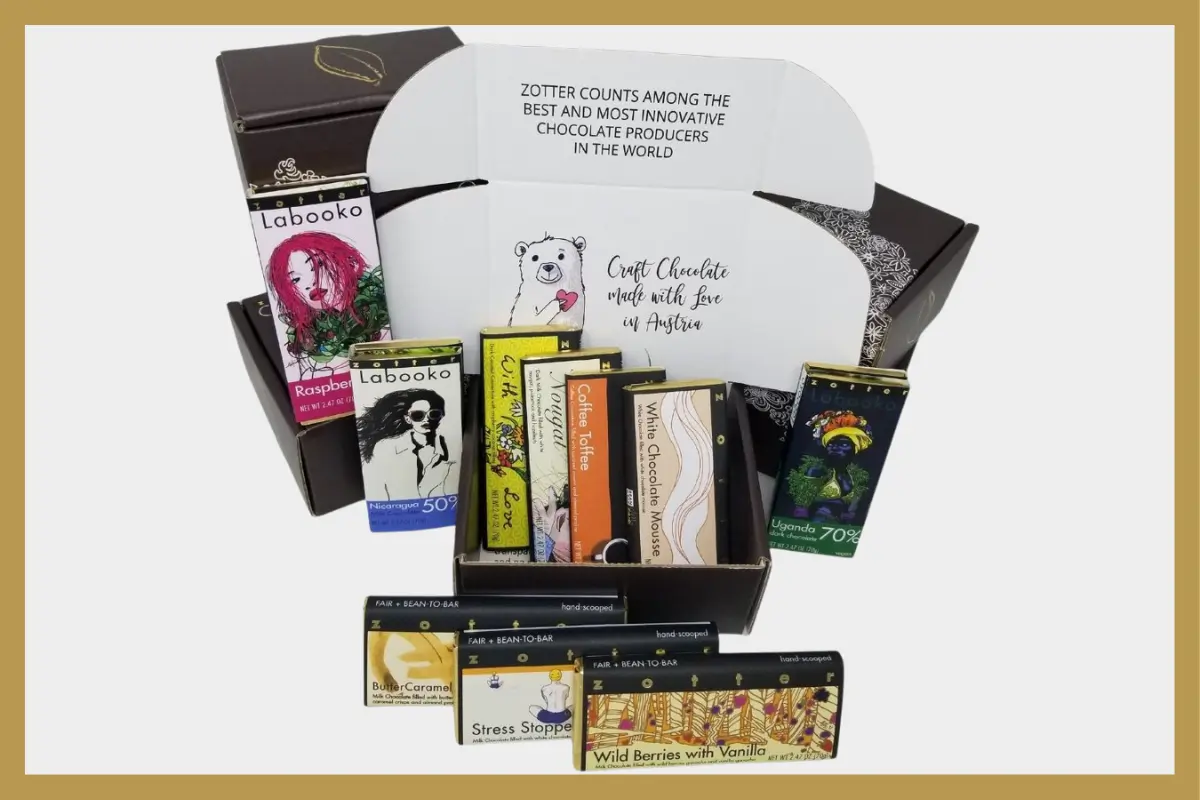
That is where premium organic chocolate earns its place as a gift and not merely a snack. It invites you to break off a square, notice the aroma, let the filling reveal itself, and pass the bar across the table. Zotter has built its reputation around exactly this kind of curiosity, pairing organic and fair trade commitments with Austrian bean-to-bar craftsmanship and an unusually fearless approach to flavor.
The Trade-Offs Are Real, and Worth Understanding
Organic chocolate is often more expensive than conventional candy. That price can reflect certified ingredients, smaller-scale production, more direct sourcing relationships, careful labor, and the realities of making chocolate with high-quality cacao rather than inexpensive bulk inputs. If you are comparing it to a bargain bar engineered for the lowest possible price, it will not be the same purchase.
But price alone does not tell the full story. A premium bar can deliver more flavor per square, which changes how you enjoy it. One exceptional bar shared after dinner, tucked into a gift box, or saved for a quiet afternoon can feel more satisfying than several forgettable snacks.
There are also practical considerations. Organic does not automatically mean dairy-free, vegan, allergen-free, low sugar, or suitable for every dietary preference. Filled chocolates may contain nuts, milk, gluten-containing ingredients, alcohol, or other allergens. Dark chocolate may be vegan in one recipe and not in another. Read the ingredient list and dietary information with the same care you bring to choosing a flavor.
Likewise, fair trade and organic are distinct certifications. A chocolate bar may carry one, both, or neither, depending on the company and product. If your priorities include farmer livelihoods, biodiversity, vegan ingredients, or minimal processing, look for the claims and details that specifically match those priorities.
How to Choose an Organic Bar You Will Actually Love
Start with how you want the chocolate to feel. For a quiet tasting moment, choose a high-cacao dark bar or a single-origin style that gives cacao room to show its nuances. For a generous, celebratory experience, explore filled bars with layered textures and unexpected ingredients. For gifting, a discovery assortment is often more memorable than trying to guess one perfect flavor.
Then look past the word “organic.” Seek a clearly stated cacao percentage when relevant, recognizable ingredients, and sourcing information that is specific rather than vague. A maker that explains its cacao, production approach, and certifications is giving you useful signals about care and accountability.
If you are new to artisan chocolate, do not assume you need to begin with the darkest possible bar. A well-made milk chocolate can be nuanced and sophisticated, while a 70% dark bar may offer a balanced entry into deeper cacao flavor. Let curiosity, not chocolate snobbery, guide the first choice.
A small tasting ritual makes every bar better
Chocolate reveals itself best at room temperature. Break off a piece, listen for a clean snap if it is a solid bar, and smell it before tasting. Let it melt instead of crunching immediately. Notice whether the first impression is creamy, fruity, roasted, floral, spicy, or bright, and how the finish changes after a few seconds.
This is not precious ceremony. It is simply a way to get the full value from chocolate made with intention. The next time you choose a bar, choose one interesting enough to slow you down.