

If you have ever stood in front of a premium chocolate shelf and wondered whether Austrian chocolate vs swiss is really a meaningful comparison, the short answer is yes – but not in the simplistic way people often assume. This is less a contest of who makes the “best” chocolate and more a question of style, philosophy, and what kind of experience you want from the bar in your hand.
Swiss chocolate has long owned the global spotlight. It is famous, polished, and deeply associated with smooth milk chocolate, meticulous technique, and luxury gifting. Austrian chocolate, by contrast, feels more like a connoisseur’s discovery – rooted in Central European pastry culture, often more adventurous in flavor, and increasingly tied to artisan, bean-to-bar, and ethically minded production.
For American shoppers who care about craftsmanship, ingredient quality, and a chocolate experience that feels memorable rather than interchangeable, those differences matter.
Austrian chocolate vs swiss: the real difference
The easiest way to understand Austrian chocolate vs swiss is to think in terms of personality.
Swiss chocolate traditionally leans toward refinement through consistency. It is admired for a velvety texture, broad accessibility, and a flavor profile that tends to favor balance over surprise. Even when Swiss makers produce dark chocolate, the overall effect is often polished and gentle.
Austrian chocolate often comes from a different creative tradition. Austria’s food culture is shaped by patisserie, café life, layered desserts, spice, fruit, nuts, marzipan, praline, and a certain love of richness with character. In chocolate, that can translate into bolder fillings, more expressive contrasts, and a stronger sense that the chocolate is part of a larger culinary imagination.
That does not mean all Austrian chocolate is experimental, or that all Swiss chocolate is conservative. It means each tradition tends to reward a different instinct. Swiss chocolate often excels when you want classic elegance. Austrian chocolate often shines when you want artistry, depth, and a little more personality.
Why Swiss chocolate became the benchmark
Swiss chocolate earned its reputation honestly. Switzerland played a major role in developing modern chocolate-making techniques, especially in milk chocolate and conching. Those innovations helped create the creamy, melt-away texture many people now associate with premium chocolate.
That matters because texture strongly shapes perceived quality. A bar that dissolves cleanly, feels silky on the palate, and avoids graininess immediately reads as luxurious. Swiss makers built an identity around that standard, and generations of consumers came to trust it.
There is also the matter of consistency. Swiss chocolate brands became global ambassadors for reliability. If you bought a Swiss bar in New York, Paris, or Tokyo, you expected a familiar kind of pleasure. For many shoppers, especially gift buyers, that predictability is part of the appeal.
But benchmark does not mean monopoly on excellence. It simply means Swiss chocolate set expectations that other traditions either embraced, resisted, or expanded.
What makes Austrian chocolate distinct
Austrian chocolate tends to feel more culinary. That is one of its great strengths.
Austria’s dessert heritage is not minimal. It is layered, textured, often playful, and deeply aromatic. Think of the flavors that show up across Viennese and broader Austrian confectionery traditions – nougat, coffee, liqueur, hazelnut, apricot, spice, wafer, cream, and dark roasted notes. Chocolate in this context is not only about smoothness. It is also about composition.
That is why Austrian bars can feel especially exciting to shoppers who are bored by standard grocery-store luxury. Instead of aiming only for universal appeal, Austrian makers are often more willing to pursue distinction. Fillings may be more vivid. Flavor combinations may be more surprising. Dark chocolate may be allowed to show more of its origin character rather than being softened into sameness.
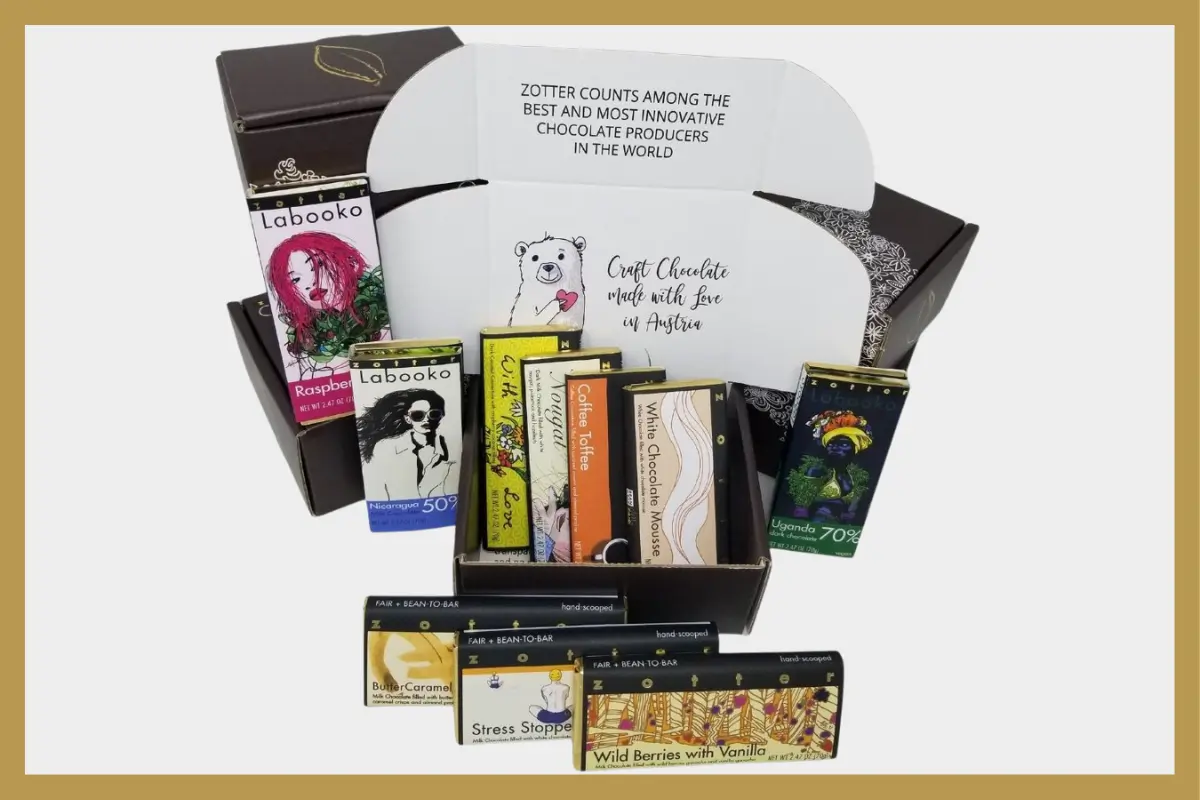
At the premium end, Austrian chocolate can also align beautifully with modern values. Organic ingredients, fair trade sourcing, bean-to-bar methods, and a handcrafted approach are all natural extensions of a tradition that already respects detail and flavor integrity. Brands like Zotter have helped make that point especially clear by combining Austrian craftsmanship with daring flavor range and strong ethical sourcing standards.
Texture, sweetness, and flavor range
If your decision comes down to what actually happens in your mouth, the comparison becomes more specific.
Swiss chocolate is often defined by smooth texture and rounded sweetness. Milk chocolate, in particular, tends to be creamy and approachable, with dairy notes that soften cocoa intensity. Even many darker Swiss bars are designed to feel balanced and harmonious rather than sharp or edgy.
Austrian chocolate can be just as refined, but it is often more willing to create contrast. A filled Austrian bar may combine silky ganache with crunchy inclusions, bright fruit acidity, nut depth, or warming spice. The result can feel more dynamic and less single-note.
Sweetness is another point of difference. Swiss chocolate often appeals to those who want comfort and polish. Austrian chocolate, especially from artisan producers, may push further into roasted, tangy, nutty, or bittersweet territory. That can make it more interesting for experienced chocolate lovers, though perhaps less immediately familiar to someone who mainly buys mainstream milk chocolate.
So which is better? It depends on your palate. If you want classic creaminess, Swiss may feel instantly satisfying. If you want complexity and a stronger sense of discovery, Austrian chocolate often offers more range.
Austrian chocolate vs swiss for dark chocolate lovers
This is where the gap can widen.
Many premium shoppers in the US are no longer looking only for sweetness. They want cacao character, transparency around sourcing, and bars that taste like they came from actual ingredients rather than a standardized flavor formula. In that space, Austrian chocolate can have a real advantage, especially when the maker is deeply invested in bean-to-bar production.
A strong Austrian dark bar may highlight origin, roast profile, fruit notes, floral tones, or earthy depth with more intention. It may also use organic and fair trade ingredients in a way that feels central to the product rather than appended for marketing.
Swiss makers certainly produce excellent dark chocolate too, but the Swiss reputation in the US still leans heavily toward milk chocolate luxury. Austrian chocolate has more room to surprise dark chocolate buyers because fewer people come to it with fixed expectations.
The ethics question matters more than ever
Chocolate is pleasure, but it is also agriculture, labor, and supply chains. For many premium consumers, quality now includes ethics.
This is an area where country comparisons can only go so far, because sourcing standards depend more on the individual maker than on national identity. Still, Austrian artisan chocolate often shows up in conversations about organic production, transparent sourcing, and fair trade because many smaller and mid-sized makers build those commitments directly into their brand DNA.
Swiss chocolate includes both highly ethical producers and large legacy brands operating at industrial scale. Again, there is no single answer. But if you care about where the cacao came from, how the sugar was sourced, and whether the product reflects a values-driven approach, it pays to look beyond national reputation and into the details on the wrapper.
For conscious shoppers, that can be a deciding factor. A beautiful bar is more compelling when the story behind it holds up.
Which one should you buy?
If you are shopping for a broadly appealing gift, Swiss chocolate is still a safe and elegant choice. It carries instant recognition, and many people associate it with classic luxury.
If you are buying for someone who loves food, notices ingredients, and gets excited by originality, Austrian chocolate may be the more memorable option. It feels less expected. It can also feel more curated, especially when the assortment includes filled bars, single-origin selections, vegan options, or unusual flavor pairings.
That is really the heart of the choice. Swiss chocolate often delivers familiarity at a high level. Austrian chocolate often delivers discovery at a high level.
Neither approach is inherently superior. A silky Swiss milk chocolate after dinner can be exactly right. So can an Austrian bar layered with fruit, nuts, spice, or a deeply expressive dark origin profile. Mood matters. Occasion matters. Taste matters.
The smartest chocolate buyers do not treat this as a rivalry to settle once and for all. They treat it as a way to buy more intentionally.
When you want tradition in its most globally recognizable form, Swiss chocolate earns its place. When you want premium chocolate that feels more adventurous, more artisan, and often more connected to sourcing and flavor design, Austrian chocolate deserves far more attention than it usually gets.
The best bar is the one that gives you a reason to pause after the first bite and notice what makes it special.