
A chocolate bar can be glossy, expensive, and wrapped in elegant paper without being genuinely memorable. The artisan chocolate brands worth seeking out earn attention much earlier in the process: at the farm, in the roast, in the texture, and in the decisions behind every ingredient. For anyone who wants more than a predictable sweet snack, that difference is deliciously clear.
What Artisan Chocolate Brands Actually Do Differently
Artisan chocolate is not simply chocolate made in smaller batches. Scale can matter, but it is not the whole story. What separates an exceptional maker is intentionality: a close relationship with cacao, disciplined production, and flavors that feel considered rather than engineered for the broadest possible audience.
Many artisan makers work bean-to-bar, meaning they take responsibility for transforming cacao beans into chocolate. They sort, roast, crack, winnow, grind, refine, conche, temper, and mold the chocolate themselves. Each step influences the final bar. A lighter roast might preserve bright berry or citrus notes from a particular cacao. A longer conche can soften rough edges and create a more velvety melt.
That process is why two dark bars with the same cacao percentage can taste entirely different. One may be rich with roasted nuts and caramel. Another may be vivid, tangy, and floral. Percentage tells you how much cacao is present. It does not tell you where the cacao came from, how it was fermented, or whether the maker allowed its character to shine.
Cacao Origin Is More Than a Label
Single-origin chocolate offers a useful entry point for curious tasters. The term generally means the cacao comes from one country, region, or sometimes a more specific estate or cooperative. The more precise the sourcing information, the easier it is to understand what you are tasting.
Origin is not a promise that one bar will be better than another. It is an invitation to notice variation. Cacao from Madagascar is often associated with lively red-fruit acidity; cacao from Peru may bring nutty, fruity, or earthy depth; cacao from Tanzania can offer bright, wine-like character. These are tendencies, not rules. Harvest conditions and a chocolatier’s recipe still matter enormously.
A thoughtfully made blend deserves just as much respect as a single-origin bar. Blending can create balance, depth, and consistency. The key question is whether the chocolate has a point of view. Does it taste distinct? Does the maker share enough about its ingredients and process to give the experience context?
Craft Lives in the Texture, Too
The first snap of a finished bar tells a small part of the story. A clean, firm snap often signals good tempering, while a smooth melt points to careful refining and conching. Premium chocolate should not feel sandy, waxy, or stubbornly thick unless a deliberately rustic texture is part of the recipe.
For filled chocolate, the standard rises further. A ganache, praline, fruit layer, or nougat should add contrast without burying the chocolate itself. Great fillings have a clear flavor and a clean finish. They are neither cloying nor anonymous.
This is where artisan makers have room to be wonderfully unconventional. Dark chocolate with coffee, cheese, chili, tropical fruit, whiskey, or a surprising savory note can be magnificent. It can also be polarizing. Adventurous flavor is most successful when it has balance: acidity against richness, salt against sweetness, spice against creaminess, and enough cacao presence to hold it all together.
Ethical Sourcing Belongs in the Experience
Cacao is an agricultural crop grown in complex global supply chains. For conscientious chocolate buyers, fair trade and organic certifications can provide meaningful assurance, particularly when paired with transparency about sourcing relationships and production standards.
No single seal answers every question. Certification systems differ, and direct trade claims can vary widely in substance. Still, artisan chocolate brands that communicate clearly about their cacao, ingredients, and values give shoppers a stronger foundation for choosing. Look for specifics rather than vague language: named origins, certification details, ingredient clarity, and a visible commitment to quality beyond the wrapper.
Organic ingredients can matter for flavor as well as farming practices. Clean, well-chosen ingredients allow cacao, fruit, nuts, and spices to taste like themselves. When a bar contains a short ingredient list, every component has nowhere to hide.
How to Evaluate Artisan Chocolate Brands Before You Buy
Begin with the back of the package, not the front. Beautiful design can signal care, but it cannot replace information. A maker that lists cacao origin, percentage, ingredients, and certifications gives you practical clues about what is inside.
Then consider what you actually want from the bar. A 100% cacao chocolate can be fascinating for an experienced taster, but it is not automatically the best introduction to craft chocolate. A 60% to 75% dark bar often offers a generous balance of cacao complexity and approachable sweetness. Milk chocolate can be every bit as sophisticated when it uses excellent cacao and real dairy or thoughtfully formulated plant-based alternatives.
If you are shopping for someone else, resist the temptation to choose only the highest cacao percentage. A gift should feel personal, not like a test of endurance. A mixed discovery selection is often the more generous choice because it creates room for surprise: a pure origin bar for the traditionalist, a bold filled bar for the flavor explorer, and a vegan option when dietary preferences are uncertain.
Price deserves context, too. Artisan chocolate costs more because high-quality cacao, fair compensation, small-batch production, organic ingredients, and intricate fillings are more expensive to produce. That does not mean every expensive bar is exceptional. It means value should be measured in flavor, sourcing, craftsmanship, and the pleasure of returning for another square.
Choosing Chocolate for the Moment
The best artisan chocolate brands make different kinds of occasions feel more deliberate. A clean, origin-forward dark bar suits a quiet tasting after dinner. A layered filled bar brings theater to a dinner party or a special gift. Drinking chocolate can turn an ordinary afternoon into a small ritual, especially when prepared slowly and served in a favorite cup.
For a first exploration, variety is your advantage. Sampling several styles reveals your preferences faster than committing to one familiar flavor. Compare two origins at a similar cacao percentage, then try a filled bar with a contrasting profile. Notice whether you prefer fruit-forward brightness, deep roasted notes, creamy sweetness, or flavors that lean savory and strange in the best possible way.
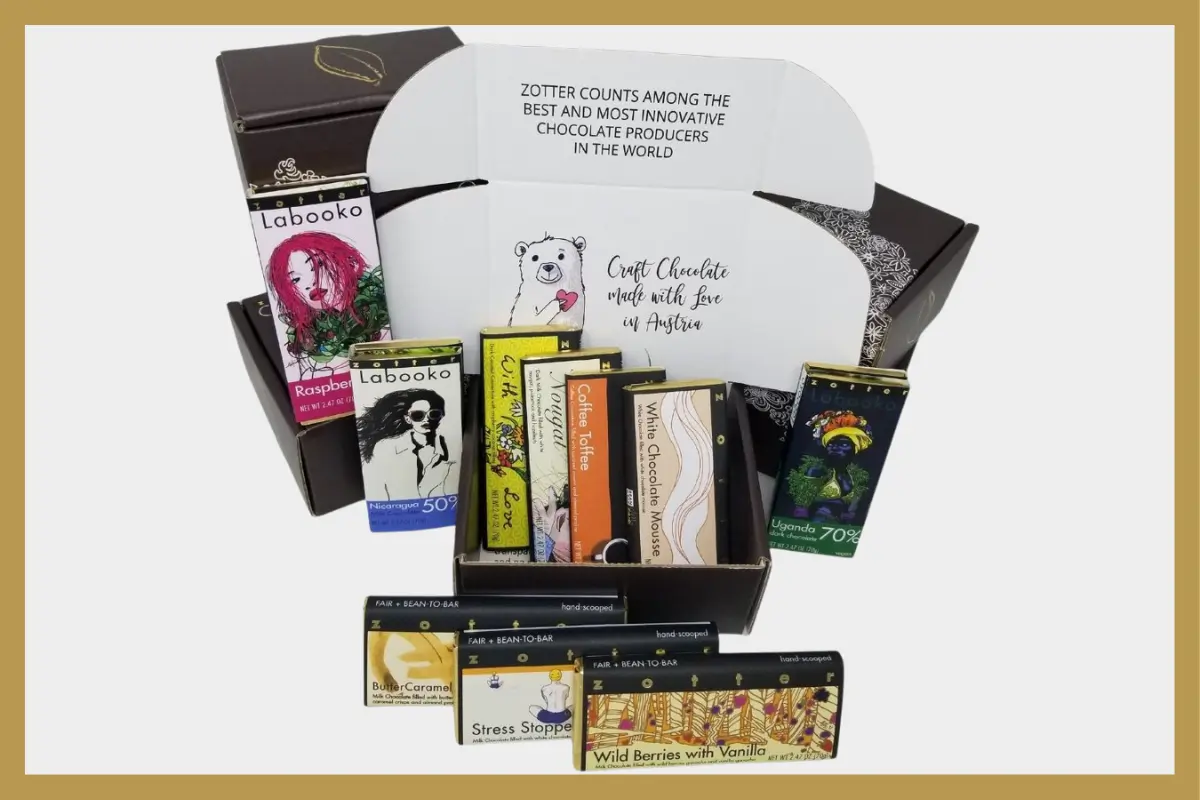
Zotter is particularly compelling for this kind of exploration because its range moves confidently between pure-origin chocolate, imaginative hand-scooped filled bars, vegan creations, and gift-ready assortments. The breadth is not an excuse to choose at random. It is an invitation to follow your palate, whether that leads you toward classic hazelnut, dark chocolate intensity, or something gloriously unexpected.
Seasonality can also guide a purchase. Fruit-driven flavors feel especially welcome in warmer months, while warming spices, nuts, marzipan, and richer fillings naturally suit cooler weather and holiday gifting. Limited collections make a gift feel timely, but a well-made classic remains a dependable pleasure year-round.
How to Taste Chocolate Like It Deserves
You do not need a formal tasting room to appreciate fine chocolate. Start at room temperature, away from strong coffee, perfume, or heavily flavored food. Look at the bar, break off a small piece, and listen for the snap. Let it begin melting rather than chewing immediately.
Pay attention to what arrives first and what lingers. You may notice fruit, toasted grains, cream, honey, citrus, spice, or a gentle bitterness that becomes more interesting as it fades. Take another piece after a sip of water. Chocolate changes as it warms, and the second taste often says more than the first.
There is no need to perform expertise. If a bar tastes joyful, comforting, dramatic, or simply unlike anything else in your pantry, that response is valid. The point of artisan chocolate is not to memorize tasting notes. It is to encounter flavor with more attention.
When choosing your next bar, pick one that asks something new of your palate: a cacao origin you have not tried, a filling that sounds slightly daring, or a format made for sharing. The right square may become a favorite. The surprising one may become a story worth passing around.