
There is a research paper making the rounds in the chocolate world right now, and we think every chocolate lover should know about it.
Published by the Institute for Cacao and Chocolate Research, a Harvard-affiliated organization, the policy brief is titled “From Producing Cocoa to Sustaining Producers.” It examines the real, on-the-ground impact of climate change on cocoa farmers in Ghana and Côte d’Ivoire, the two countries that together supply roughly 60% of the world’s cocoa. The findings are sobering, and they confirm something Zotter has believed and acted on for more than two decades: the future of good chocolate depends entirely on the wellbeing of the people who grow the cacao.
What the Research Found
The brief documents what cocoa farmers are already living through today, not in some distant future scenario. Rising temperatures, prolonged droughts, erratic rainfall, collapsing yields, rising production costs, and physical exhaustion are all compounding at once. The researchers found that even well-intentioned policy tools, including fair trade price premiums and the so-called “Living Income Differential,” are increasingly being outpaced by climate-related production losses.
In other words, paying a better price is necessary, but it is no longer sufficient on its own.
The brief calls for a fundamental shift in how the entire cocoa industry thinks about its responsibilities: away from a yield-centered model, and toward a producer-centered resilience model. The central argument is clear and worth quoting directly:
“A climate-resilient cocoa sector requires climate-resilient cocoa producers.”
That means investing not just in trees and tonnage, but in the health, adaptive capacity, and long-term dignity of the human beings doing the work.
This Is Not News to Zotter
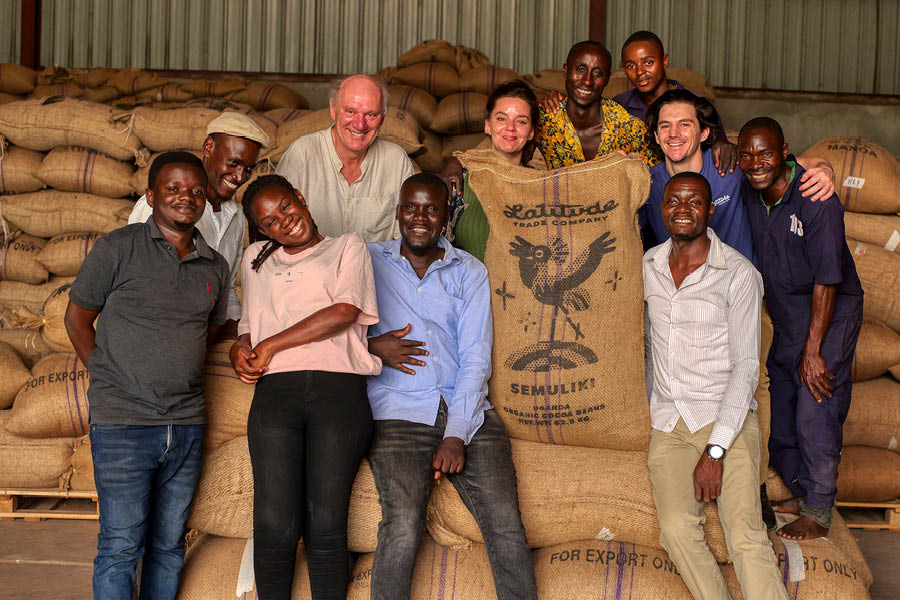
Josef Zotter has been traveling to cacao-growing regions since 2001. Not to check boxes on a compliance form, but to understand the people, the land, and the conditions behind every bean. Zotter sources cacao from cooperatives in 16 countries across Latin America, the Caribbean, and Africa, including Ghana, where much of this new research was conducted.
The Zotter approach has always been grounded in a simple but radical idea: the cacao farmer is a partner, not a supplier. That distinction matters enormously in practice.
Zotter pays the world market price plus a quality premium, plus an organic premium, plus a fair trade premium, on every tonne of cacao purchased. The entire Zotter company is Fair Trade verified, and Zotter is a member of the World Fair Trade Organization (WFTO), which audits the whole enterprise, not just individual products, against ten rigorous fair trade standards. These include fair payment, no child labor, transparency, environmental responsibility, and the right of workers to organize.
Crucially, Zotter also rejects the practice of “mass balancing,” a common industry workaround that allows companies to trade in fair trade certificates without physically ensuring that certified cacao reaches certified chocolate. At Zotter, physical traceability is guaranteed. The fair trade ingredients in your bar are the actual fair trade ingredients, not a paper offset.
Why Fair Trade Alone Is Not the Whole Answer
The research brief makes a point that Zotter’s own FAQ on fair trade addresses with unusual candor: certification systems are imperfect, and no system is 100% secure. Corruption, inconsistency, and the gap between intention and execution exist in every supply chain.
What makes the difference, in Zotter’s view, is not just the certificate. It is the relationship.
Zotter has worked with cooperatives for many years, building the kind of trust that allows for honest conversations when things go wrong. When irregularities occur, orders are suspended immediately, a special audit is triggered, and the relationship is only resumed when the cooperative can demonstrate that internal controls are functioning again. In cases where problems persist, the partnership ends.
The fair trade premium itself goes to the cooperative as a community, not to individual farmers as a direct payment. The members of the cooperative then decide together how to invest it: schools, medical care, literacy programs, reforestation projects, irrigation infrastructure. These are exactly the kinds of investments the new policy brief identifies as essential for building long-term climate resilience at the community level.
What This Means for the Chocolate in Your Hands
Every Zotter bar carries a fair trade share indicator on the packaging, marked with an asterisk (*). For pure dark chocolates made only from cacao and sugar, that share is 100%. For bars that include ingredients from Austria or the EU, such as Tyrolean whole milk powder, the fair trade share reflects only the ingredients that come from the global south, because fair trade certification applies where it is meaningful and verifiable.
This transparency is intentional. Zotter does not claim more than it can stand behind.
The policy brief’s eight-point agenda for cocoa-producing communities calls for, among other things, trust-based partnerships, long-term investment over short-term input distribution, and a shift from viewing cocoa as a commodity to recognizing it as a national economic resilience strategy for producing countries. Reading that list, it is hard not to see it as a description of what Zotter has been quietly doing for the past 25 years.
Why You, as a Consumer, Are Part of This
Here is the part of the story that does not always get told.
Zotter’s FAQ notes that more certified organic and fair trade cacao is produced globally than is currently purchased. When a cooperative cannot find a buyer for its certified cacao, that cacao gets sold at the conventional price, without the premiums, and the farmers who invested in better practices receive no reward for doing so. The demand side of this equation is us, all of us who buy chocolate.
Every time you choose a bar that is fair trade verified, you are not just buying a product. You are creating the market signal that makes it worthwhile for a farmer in Ghana or Peru or Nicaragua to keep investing in quality, sustainability, and community. You are part of the reason a cooperative can pay for a school, or fund a drought-resistant planting program, or keep a family on their land.
The research brief ends with a call for policy change at the governmental and institutional level, and that work is important. But the market speaks every day, and it speaks through purchasing decisions.
A Final Thought
We share this research not to lecture, but because we think our customers deserve to understand the full picture of what they are supporting when they choose Zotter. The chocolate world is complicated, imperfect, and under real pressure from climate change. The people growing the cacao are already feeling consequences that most of us in the wealthy world have barely begun to register.
Zotter’s commitment to fair trade is not a marketing strategy. It is a conviction that good chocolate and ethical sourcing are inseparable, and that the farmer who grew the cacao deserves to be treated as the essential partner they are.
If you want to read the full policy brief, you can find it at the Institute for Cacao and Chocolate Research. It is worth your time.
And if you want to explore how Zotter thinks about fair trade sourcing in depth, the full explanation is on our Fair Trade & Cocoa Origins page. It is one of the most honest and detailed accounts of fair trade practice you will find from any chocolate maker.
Zotter Chocolates US is the exclusive US importer and distributor of Zotter chocolate, made in Austria and shipped nationwide from Florida.